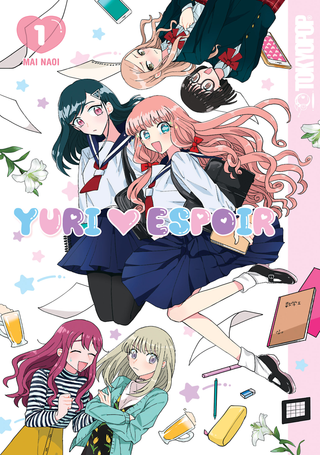
For those who delve deep into the world of *Girls’ Love* (GL), few titles manage to balance the line between whimsical curiosity and poignant realism as effectively as Yuri Espoir. Written and illustrated by the talented Mai Naoko, this manga is a sophisticated exploration of identity, the inevitability of adulthood, and the multifaceted nature of affection. Serialized in the prestigious *Comic Yuri Hime*, it stands as a testament to the evolving landscape of the genre.
The Premise: A Race Against Time
The story follows Kokoro, a high school student who carries a heavy secret: her future has already been decided. Her parents have arranged a marriage for her, set to take place immediately after she graduates. Faced with the looming "deadline" of her personal freedom, Kokoro decides that she cannot enter this union without first experiencing—or at least witnessing—the pinnacle of human emotion: true love.
However, Kokoro’s approach is unconventional. Rather than seeking a boyfriend, she finds herself fascinated by the concept of "Yuri" (love between women). She becomes a self-appointed "Yuri Hunter," wandering the city and her school with a sketchbook in hand, seeking out girls who share a special bond. Her goal is to document these relationships, hoping that by observing the purity and intensity of these connections, she might find a way to reconcile with her own impending fate.
Narrative Structure and Demographics
While many Yuri titles fall into the *Shojo* (targeted at young girls) or *Seinen* (targeted at young men) categories, *Yuri Espoir* sits comfortably in a space that appeals to both, often leaning toward the Josei and Seinen sensibilities due to its mature, introspective tone. It avoids the hyper-sexualization often found in some corners of the genre, focusing instead on the psychological and emotional weight of its characters' choices.
The manga is structured through a series of vignettes. While Kokoro remains the central protagonist and the "lens" through which we see the world, the story frequently shifts focus to the various pairs of girls she encounters. Each "case" Kokoro documents explores a different facet of love—from the bittersweet sting of unrequited feelings to the toxic codependency of a secret affair.
Key Themes: Freedom, Duty, and the "Gaze"
1. The Conflict of Autonomy:
At its core, *Yuri Espoir* is a story about the loss of agency. Kokoro’s arranged marriage serves as a metaphor for the societal pressures that often dictate the lives of young women. Her obsession with Yuri is a form of rebellion; she is looking for a type of love that exists outside the traditional, patriarchal structure she is being forced into.
2. The Observer vs. The Participant:
One of the most compelling themes is the "gaze." Kokoro starts as a mere observer, a voyeur of other people's happiness. However, the manga masterfully deconstructs this position. Can one truly understand love just by watching? As the story progresses, the line between Kokoro’s role as a chronicler and her own suppressed desires begins to blur, forcing her to confront whether she is running away from her own heart.
3. The Spectrum of "Espoir" (Hope):
The title itself is a beautiful contradiction. "Espoir" is the French word for hope, yet the manga is steeped in a sense of melancholy. It explores the "hope" that these fleeting high school romances can survive the transition into adulthood, and the "hope" Kokoro clings to that she might find a loophole in her destiny.
Why You Should Read It
*Yuri Espoir* is not your typical "fluff" manga. Mai Naoko’s art style is clean yet expressive, capturing the subtle shifts in facial expressions that convey more than dialogue ever could. It is a "must-read" for fans of series like *Bloom Into You* or *Adachi and Shimamura*, as it treats the subject of female intimacy with a rare level of dignity and philosophical depth.
For the SEO-savvy reader or the seasoned otaku, *Yuri Espoir* offers a refreshing take on the "arranged marriage" trope by pivoting it into a journey of self-discovery. It challenges the reader to look beyond the surface of "Girls' Love" and see it as a profound expression of human connection in the face of an uncertain future. Whether you are a veteran of the genre or a newcomer looking for a story with substance, Kokoro’s sketchbook is a journey worth following.
📖 Leer online en Donmanga:
➡️ Yuri Espoir – Leer Manga