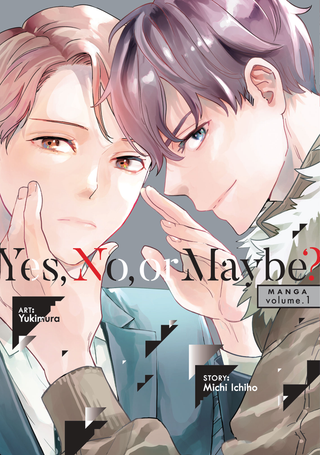
As a seasoned scholar of the medium, it is a pleasure to dissect a work that transcends the typical tropes of its genre. "Yes, No, or Maybe?" (known in Japan as *Yes ka No ka Hanbun ka*) is a standout title that originated as a highly acclaimed light novel series by Michi Ichiho, later receiving a brilliant manga adaptation illustrated by Yukimitsu. While many associate the Boys’ Love (BL) genre with escapist fantasy, this series offers a poignant, razor-sharp critique of professional life, social masks, and the exhausting nature of modern perfectionism.
Demographic and Genre Classification
Primarily categorized as Boys’ Love (BL), the manga targets a Josei demographic—adult women and mature readers who appreciate nuanced character development over simple plot beats. Unlike "high school" romances, this is a workplace drama that leans heavily into the psychological toll of the broadcasting industry. It is a "Seinen-adjacent" romance in its maturity, focusing on the complexities of adult identity and the professional "facade" we all maintain.
The Plot: A Tale of Two Personas
The story centers on Kei Kunieda, a rising star in the world of television journalism. To the public, he is the "Prince of the News"—charming, polite, impeccably dressed, and the epitome of the perfect announcer. However, this is a carefully constructed lie. Inside, Kei is a cynical, foul-mouthed misanthrope who views his viewers and colleagues with utter disdain. He lives in a state of constant "On" and "Off" modes, using his "Off" time to dress in tattered sweats, wear a surgical mask, and vent his frustrations to the world in secret.
The status quo is shattered when Kei, in his "Off" mode, literally crashes into Ushio Tsuzuki, a stop-motion animator he recently interviewed in his "On" persona. Because of Kei’s disheveled appearance and mask, Ushio doesn't recognize the famous news anchor. Through a series of coincidences, the two begin to spend time together.
The central conflict arises from a "love triangle" involving only two people. Ushio begins to fall for the blunt, honest, and somewhat grumpy "Off" version of Kei (who introduces himself under a pseudonym). Meanwhile, in the professional world, the "Prince" Kei must continue to interact with Ushio for work, leading to a complex web of deception. Kei finds himself jealous of his own alter ego, struggling with the realization that Ushio loves the version of him that he considers "trash," while the version the world admires is the one he finds most suffocating.
Core Themes: The Mask and the Self
The brilliance of *Yes, No, or Maybe?* lies in its exploration of Dual Identity. The title itself refers to the "Yes" (the public persona), the "No" (the private cynicism), and the "Maybe" (the gray area where the true self resides).
1. The Exhaustion of Perfectionism: The manga vividly portrays the mental health toll of maintaining a public image. Kei’s internal monologues are a masterclass in showing how the pressure to be "perfect" can lead to deep-seated resentment.
2. Authenticity in Love: Can you truly love someone if you only know half of them? The story asks whether a relationship built on a lie can survive, even if the "lie" is simply a hidden part of one's personality.
3. Professionalism vs. Passion: Through Ushio’s character, the manga explores the world of independent art and the dedication required to follow a creative path, contrasting it with Kei’s corporate, highly controlled environment.
Why It Matters for SEO and Readers
For fans looking for a mature, grounded romance that deals with real-world anxieties, *Yes, No, or Maybe?* is essential reading. It avoids the "toxic" tropes often found in older BL titles, instead focusing on communication, self-acceptance, and the vulnerability required to let someone see your "ugly" side.
In conclusion, this manga is more than just a romance; it is a sophisticated character study of a man trying to find a middle ground between his two extremes. It is a must-read for those who enjoy workplace dramas like *Wotakoi* but crave a deeper, more psychological exploration of the human psyche. Whether you are a veteran otaku or a newcomer to the genre, Kei Kunieda’s journey toward being "halfway" is one of the most relatable narratives in contemporary manga.
📖 Leer online en Donmanga:
➡️ Yes, No, or Maybe – Leer Manga