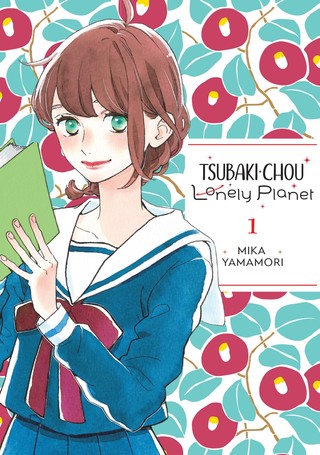
For any seasoned connoisseur of the Shojo genre, the name Mika Yamamori carries a weight of aesthetic excellence and emotional depth. Following the massive success of *Hirunaka no Ryuusei* (Daytime Shooting Star), Yamamori returned with a work that solidified her status as a master of the "slow-burn" romance: Tsubaki-chou Lonely Planet. Serialized in *Margaret* magazine between 2015 and 2019, this manga is a quintessential example of modern Shojo, blending domestic slice-of-life elements with a poignant exploration of what it means to find a "home" in another person.
The Plot: A Tale of Debt and Domesticity
The story follows Fumi Ohno, a second-year high school student whose life is abruptly upended when her father’s staggering gambling debts lead to their eviction. Left homeless and with her father heading to work on a tuna fishing boat to pay off his creditors, Fumi is forced to find a live-in job to support herself. Despite her young age, Fumi is exceptionally disciplined, frugal, and skilled in housework—traits born out of necessity after her mother’s early passing.
Her search leads her to the doorstep of a residence in Tsubaki-chou, where she is hired as a housekeeper for Akatsuki Kibikino. Expecting an elderly man, Fumi is shocked to find that her new employer is a young, brooding, and strikingly handsome historical fiction writer. Akatsuki is a man of few words, often appearing cold, unkempt, and completely consumed by his deadlines.
The narrative follows the daily lives of these two "lonely planets" as they orbit one another within the confines of their shared home. What begins as a strictly professional relationship—marked by Akatsuki’s bluntness and Fumi’s diligent service—gradually evolves into a deep emotional bond. As Fumi navigates the complexities of high school life and her growing feelings for her employer, Akatsuki begins to open his heart, learning that there is more to life than the ink and paper of his manuscripts.
Demographics and Genre
*Tsubaki-chou Lonely Planet* is firmly rooted in the Shojo demographic. It targets a young female audience but possesses a cross-over appeal for Josei readers due to its mature handling of themes and its focus on the domestic sphere. It falls under the genres of Romance, Slice of Life, and Drama. Unlike many high school romances that focus on school festivals and classroom antics, this manga spends a significant amount of time within the "private" space of the home, giving it a more intimate and grounded atmosphere.
Main Themes: Loneliness and the Concept of "Home"
The "Lonely Planet" in the title is a masterful metaphor for the characters' internal states.
1. Finding a Place to Belong: Fumi is literally and figuratively homeless at the start of the series. Her journey is not just about finding a roof over her head, but about finding emotional security. For Akatsuki, who has lived a solitary life driven by his career, Fumi represents the warmth and stability he never knew he lacked.
2. The Age Gap and Maturity: While the manga features an age-gap romance (Fumi is 16-17 and Akatsuki is in his mid-20s), Yamamori handles it with a focus on emotional maturity rather than scandal. The power dynamic is balanced by Fumi’s surprising domestic competence and Akatsuki’s social awkwardness.
3. The Beauty of the Mundane: A core theme is the elevation of daily chores—cooking, cleaning, waiting for someone to come home—into acts of love. The manga argues that romance isn't just found in grand gestures, but in the quiet consistency of being there for someone.
Visual Artistry: The Yamamori Touch
One cannot discuss *Tsubaki-chou Lonely Planet* without mentioning the art. Mika Yamamori is renowned for her "clean" yet incredibly expressive style. Her character designs are fashionable and distinct, and her use of negative space and cinematic paneling creates a melancholic yet beautiful atmosphere. The way she draws eyes and subtle facial expressions allows the reader to understand the characters' unspoken feelings, which is vital for a story where the protagonists are often emotionally guarded.
In conclusion, *Tsubaki-chou Lonely Planet* is a must-read for anyone who appreciates a character-driven story with high-tier art. It is a gentle, moving exploration of two isolated souls learning how to coexist, proving that even the loneliest planet can find its sun.
📖 Leer online en Donmanga:
➡️ Tsubaki-chou Lonely Planet – Leer Manga