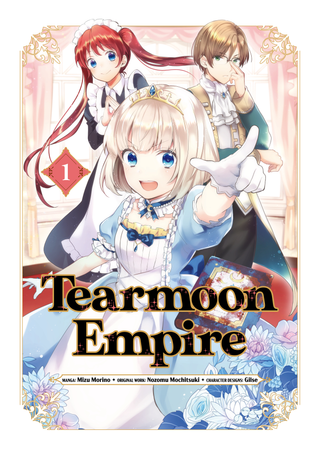
In the vast landscape of the "villainess" and "reincarnation" subgenres, few titles manage to balance high-stakes political drama with laugh-out-loud comedy as masterfully as Tearmoon Empire (*Tearmoon Teikoku Monogatari: Dantai no Kuni kara Hajimaru, Hime no Tensei Gyakuten Story*). Originally a light novel series by Nozomu Mochitsuki, the manga adaptation—illustrated by Mizuho Itsuki—has garnered a dedicated following for its unique take on the "second chance at life" trope.
The Plot: A Race Against the Guillotine
The story begins at the literal end. Mia Luna Tearmoon, the selfish and pampered princess of the crumbling Tearmoon Empire, is executed by guillotine following a bloody revolution. However, instead of passing into the afterlife, she wakes up in her twelve-year-old body, years before the uprising began. Clutched in her hands is her blood-stained diary from the future—a grim reminder of the fate that awaits her if she doesn't change the course of history.
Terrified of "Guillotine-kun" (her personification of the execution device), Mia resolves to fix the empire. But there is a catch: Mia hasn't actually become a better person. She is still lazy, vain, and hates onions. Her "heroic" reforms are driven entirely by a desperate, cowardly desire for self-preservation. Whether she is preventing a famine or stopping a plague, her internal monologue is focused on her own comfort. Yet, through a series of hilarious misunderstandings, her loyal subjects—including the brilliant civil servant Ludwig and her devoted maid Anne—interpret her selfish actions as the profound wisdom of a visionary saint.
Demographics and Genre
*Tearmoon Empire* is primarily categorized as a Shoujo fantasy, as it was serialized in *Comic Corona* (a section of the Nico Nico Seiga site often associated with female-oriented fantasy). However, its appeal is remarkably broad. It functions as a Seinen-adjacent political satire due to its intricate focus on governance, economics, and social reform. It also fits firmly within the Isekai/Tensei (reincarnation) and Comedy genres, making it a "must-read" for fans of *My Next Life as a Villainess* or *Overlord*, where the gap between the protagonist's intentions and the world's perception is the main source of entertainment.
Main Themes
1. The Comedy of Errors (Misinterpretation): The core of the manga is the "Great Sage of the Empire" misunderstanding. Mia’s internal cowardice is consistently mistaken for strategic genius. This theme explores how perception can shape reality, as Mia is forced to live up to the impossible reputation her followers have built for her.
2. Redemption Through Self-Interest: Unlike many protagonists who seek redemption out of guilt, Mia seeks it out of fear. The manga poses an interesting philosophical question: Do the motives behind a good deed matter if the outcome saves thousands of lives?
3. The Butterfly Effect and Fate: Armed with her future diary, Mia attempts to snip the "threads of fate" that lead to the revolution. The story meticulously shows how small changes—like befriending a rival or investing in a specific crop—can ripple outward to prevent a national collapse.
4. Class and Social Reform: Beneath the comedy lies a sharp critique of aristocratic negligence. Mia’s journey forces her to confront the poverty and systemic failures she ignored in her previous life, providing a surprisingly grounded look at empire management.
Why You Should Read It
*Tearmoon Empire* stands out because of its protagonist. Mia is incredibly relatable; she wants to sleep in, eat sweets, and avoid responsibility, yet she accidentally becomes the greatest leader in history. The manga’s art perfectly captures the "gap moe" between her regal appearance and her frantic, panicked expressions.
For readers looking for a story that combines political intrigue with a lighthearted, satirical edge, *Tearmoon Empire*
📖 Leer online en Donmanga:
➡️ Tearmoon Empire – Leer Manga