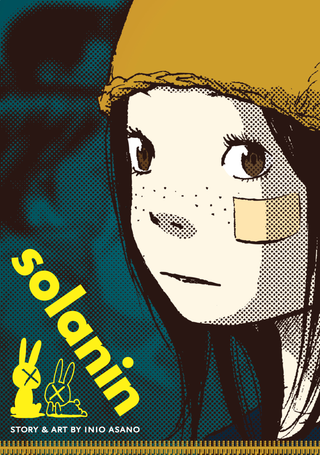
As an expert in the medium, it is a privilege to discuss one of the most poignant and culturally significant works of the 21st century. Solanin, written and illustrated by the legendary Inio Asano, is not just a manga; it is a generational anthem. Published between 2005 and 2006 in *Weekly Young Sunday*, this masterpiece perfectly captures the "quarter-life crisis" that defines the transition from the freedom of university to the crushing reality of the corporate world.
Demographic and Genre
*Solanin* is a quintessential Seinen manga. While Shonen focuses on growth through battle and Shojo explores the intricacies of romance, Seinen targets young adult men (and by extension, adults of all genders) by tackling mature, philosophical, and grounded themes. It fits firmly within the Slice of Life and Drama genres, eschewing supernatural elements or high-stakes action in favor of a hyper-realistic exploration of the human condition.
Detailed Plot Synopsis
The story centers on Meiko Inoue and Naruo Taneda, a young couple who have been graduated from university for two years. They live together in a small apartment in Tokyo, navigating the murky waters of "adulthood."
Meiko is an "Office Lady" (OL) at a soul-crushing corporation. She spends her days dealing with petty office politics and the realization that her life has become a repetitive cycle of commuting and filing paperwork. Taneda, on the other hand, works a low-paying, part-time job as an illustrator for a press company. His true passion lies in his band, Rotti, where he plays guitar and sings alongside his college friends: Kato, a perpetual student, and Billy, who has taken over his family’s pharmacy.
The narrative tension begins when Meiko, fueled by a mix of impulsiveness and existential dread, decides to quit her job. She has enough savings to last a year and hopes that this "freedom" will help her find a sense of purpose. However, her resignation puts pressure on Taneda. Seeing Meiko take a leap of faith inspires Taneda to give his music one last, honest shot. He decides to record a professional demo of their song, "Solanin," and try to make it in the music industry before "giving up" and becoming a full-time member of society.
What follows is a deeply moving journey of self-discovery. The manga meticulously tracks their rehearsals, their small domestic joys, and the looming shadow of the future. Asano masterfully portrays the fragility of their dreams. When the band’s attempt at success meets the cold indifference of the music industry, the characters are forced to confront whether their passion is a viable path or merely a lingering ghost of their youth. The story takes a dramatic, emotional turn midway through that forces Meiko to step out of her comfort zone and take up a mantle she never expected to wear, leading to a climax that is both heartbreaking and incredibly cathartic.
Main Themes
1. The Quarter-Life Crisis and Existentialism:
*Solanin* is perhaps the best literary representation of the "What now?" phase. It explores the "solanin" of the title—a poison found in potato sprouts. Asano uses this as a metaphor for the bitterness that grows when one stays in a state of stagnation for too long. The characters struggle with the fear that they are becoming "boring adults" and losing their authentic selves.
2. The Death of Dreams vs. Acceptance:
A recurring theme is the necessity of letting go. The manga asks: Is it a failure to give up on a dream, or is it a form of maturity? Asano doesn't provide easy answers. He shows that while some dreams must die for us to survive, the spirit of those dreams can be transformed into something new and sustainable.
3. Grief and Resilience:
Without venturing into spoiler territory, the latter half of the manga deals heavily with loss. It examines how a group of friends copes with a void in their lives and how music serves as a bridge between the past and the future. It’s a testament to the idea that we carry the people we love with us through the art and memories they leave behind.
4. The Beauty of the Mundane:
Asano’s hyper-detailed art style—often using manipulated photographs for backgrounds—elevates the mundane streets of Tokyo to something poetic. The theme of finding beauty in a cramped apartment, a walk by the river, or a simple bowl of ramen is central to the "Slice of Life" experience in *Solanin*.
Conclusion
For any reader feeling lost in their 20s or 30s, *Solanin* is essential reading. It is a bittersweet, honest, and ultimately hopeful look at the struggle to find one's voice in a world that often demands silence. Inio Asano’s work remains a cornerstone of modern Seinen, proving that sometimes the most "epic" stories are the ones happening inside our own quiet lives.
📖 Leer online en Donmanga:
➡️ solanin – Leer Manga