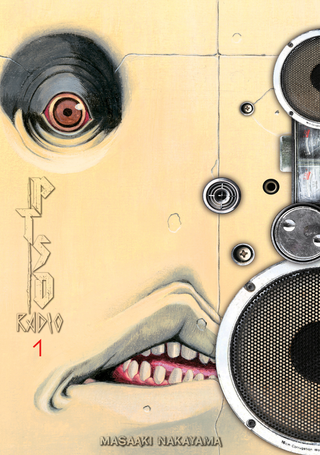
For connoisseurs of the macabre and students of Japanese horror, few titles evoke the same visceral dread as PTSD Radio (known in Japan as *Kouishou Radio*). Created by the master of the "uncanny," Masaaki Nakayama—the visionary behind the legendary *Fuan no Tane*—this manga is not merely a collection of scary stories; it is a fragmented, non-linear descent into a specific, localized nightmare.
Demographics and Context
*PTSD Radio* is firmly rooted in the Seinen demographic. Unlike Shonen horror, which often relies on action-oriented survival or "battle" mechanics against monsters, Seinen horror focuses on psychological erosion, existential dread, and graphic, unsettling imagery that lingers long after the book is closed. Published in the magazine *Nemuki+*, it targets an adult audience capable of appreciating a narrative that refuses to hold the reader's hand, opting instead for a disjointed, "glitchy" storytelling style that mimics the interference of an old radio.
The Plot: Tuning into the Macabre
The narrative structure of *PTSD Radio* is its most unique feature. The manga is presented as a series of "frequencies." Each chapter is a brief vignette, often only a few pages long, that appears at first to be an isolated incident of supernatural haunting. However, as the reader "tunes in" to higher frequencies, a terrifying tapestry begins to emerge.
The central thread connecting these disparate lives, eras, and tragedies is the legend of Ogushi-sama, a mysterious and malevolent deity (or spirit) associated with hair. In the world of *PTSD Radio*, hair is not just a biological feature; it is a conduit for the divine and the damned. The plot revolves around the historical worship and eventual neglect of Ogushi-sama, whose influence manifests as grotesque physical distortions, sudden disappearances, and psychological collapse.
The story jumps across time—from feudal Japan to the modern era—showing how an ancient ritual or a forgotten shrine can cast a long, dark shadow over contemporary society. There is no single protagonist; instead, the "hero" is the mystery itself, as the reader pieces together how a construction project in the present might have disturbed a ritualistic site from the past, leading to a viral spread of supernatural trauma.
Main Themes: Trauma, Folklore, and the Mundane
The title *PTSD Radio* is a masterstroke of thematic signaling. The Japanese title, *Kouishou Radio*, translates more closely to "After-effects Radio." This highlights the manga's primary theme: the inescapable persistence of trauma.
1. The Weight of the Past: Nakayama explores how the sins or traditions of ancestors manifest as "after-effects" in the lives of the innocent. The horror is rarely a result of the victim's choices; it is an environmental toxin, a spiritual radiation that they have inherited.
2. The Body as a Canvas for Horror: Utilizing "Body Horror," the manga focuses on the vulnerability of the human form. Hair—something we usually associate with beauty or identity—becomes a source of revulsion, growing out of eyes, throats, and walls.
3. The "Glitch" in Reality: The non-linear storytelling reflects a fractured psyche. By jumping between characters and time periods, Nakayama creates a sense of "cosmic insignificance." The victims are merely blips on a frequency, momentarily tuned into a broadcast of pure agony.
The Art: The Uncanny Valley
As an erudite otaku, one must acknowledge Nakayama’s art style. He utilizes a stark contrast between mundane, almost sketchy character designs and hyper-detailed, realistic depictions of the supernatural entities. This creates a "jump scare" effect on the page. When Ogushi-sama or its manifestations appear, the level of detail increases exponentially, forcing the reader to stare into the face of something that feels "too real" for the medium.
Conclusion
*PTSD Radio* is a mandatory read for fans of Junji Ito or H.P. Lovecraft. It avoids the tropes of "slasher" horror, choosing instead to build a world where the air itself feels heavy with the threat of being "harvested." It is a brilliant example of how Seinen manga can push the boundaries of the medium, using a fragmented structure to tell a story about the terrifying continuity of human suffering and the dark gods that feed upon it. If you are looking for a manga that feels like a cursed object in your hands, *PTSD Radio* is the frequency you’ve been searching for.
📖 Leer online en Donmanga:
➡️ PTSD Radio – Leer Manga