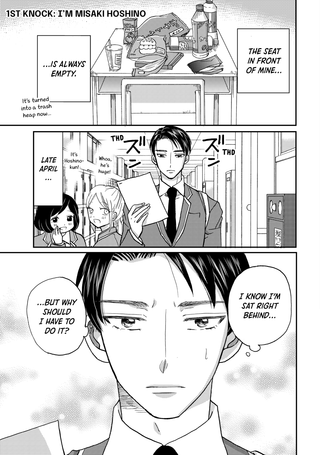
Unlocking Connection: A Deep Dive into "Opening the Door to Hinata-san's Heart"
In the vast landscape of contemporary manga, few titles manage to balance the delicate line between lighthearted "slice-of-life" and the profound psychological barriers of social anxiety as gracefully as *Opening the Door to Hinata-san's Heart* (*Hinata-san no Kokoro no Tobira o Aketai*). Written and illustrated by the talented Tsuru, this series offers a refreshing, "iyashikei" (healing) take on the classic trope of a shared living space, focusing less on high-octane drama and more on the quiet, transformative power of human kindness.
The Premise: A Threshold Between Two Worlds
The story follows Kouta, a high school student who, due to family circumstances, finds himself moving into a relatively affordable share house. Expecting a standard boarding house experience, Kouta is instead met with a peculiar living arrangement. The landlord is Hinata-san, a young woman of striking beauty but crippling social anxiety. Hinata is a "hikikomori" (shut-in) of sorts, though she functions as a landlord from behind the safety of her bedroom door.
The narrative engine of the manga is Kouta’s persistent, yet respectful, attempt to bridge the gap between them. Hinata communicates primarily through notes, muffled voices through wood, or digital means, terrified of face-to-face interaction. Kouta, rather than forcing her out of her comfort zone, decides to meet her where she is. The "door" in the title serves as both a literal physical barrier and a powerful metaphor for the emotional walls we build to protect ourselves from the judgment of the outside world.
Demographic and Context: The Seinen Sensitivity
While the art style—characterized by soft lines, expressive eyes, and a warm atmosphere—might lead some to mistake it for a standard Shonen rom-com, *Opening the Door to Hinata-san's Heart* is firmly rooted in the Seinen demographic. Serialized in Houbunsha’s *Manga Time Kirara Forward*, it targets a young adult audience that appreciates nuanced character growth and a slower, more contemplative pace.
Unlike Shonen series that often rely on "tsundere" tropes or exaggerated comedic misunderstandings, this Seinen work treats Hinata’s condition with a level of maturity and empathy. It acknowledges that social anxiety isn't something that disappears with a single "inspiring" speech; it is a day-by-day struggle of small victories and occasional setbacks.
Core Themes: Isolation, Patience, and the "Iyashikei" Spirit
The primary theme of the manga is the courage to be vulnerable. Hinata’s isolation isn't portrayed as a quirk, but as a heavy burden. Through Kouta’s eyes, the reader learns the value of patience. He doesn't demand that she "fix" herself; he simply offers his presence, a warm meal, or a kind word. This dynamic shifts the focus from "changing" someone to "supporting" someone, which is a vital distinction in modern storytelling.
Another significant theme is the sanctity of the home. In a world that is often loud and demanding, the share house becomes a sanctuary. The manga meticulously details domestic activities—cooking, cleaning, and shared meals—elevating these mundane tasks to acts of intimacy and healing. This places the series squarely within the Iyashikei genre, intended to have a calming effect on the reader.
Why It Stands Out
What makes this manga a "must-read" for any erudite otaku is its restraint. It avoids the "harem" pitfalls common in share-house settings. Instead, it builds a singular, deep connection between two people who are both, in their own ways, trying to find their place in the world. The supporting cast adds flavor without distracting from the central emotional arc, providing a broader look at how different people navigate social expectations.
For fans of titles like *March Comes in Like a Lion* or *Komi Can’t Communicate*, but who desire a more grounded, Seinen-oriented domestic setting, *Opening the Door to Hinata-san's Heart* is a
📖 Leer online en Donmanga:
➡️ Opening the Door to Hinata-san's Heart – Leer Manga