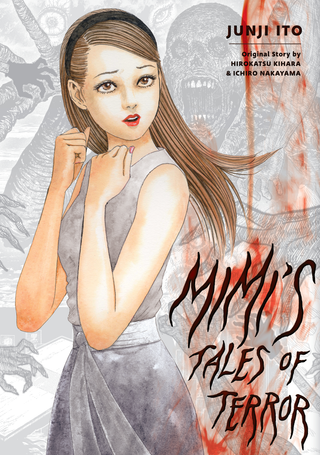
As an aficionado of the macabre and a long-time scholar of the medium, it is my absolute pleasure to delve into one of the most unsettling gems in the library of horror: "Mimi’s Tales of Terror" (known in Japan as *Mimi no Kaidan*). This work is a fascinating intersection of two titans of Japanese horror: the legendary manga artist Junji Ito and the renowned folklorists Hirokatsu Kihara and Ichiro Nakayama.
The Premise: A Magnet for the Macabre
At the heart of this collection is Mimi, a seemingly ordinary college student whose life is anything but mundane. Mimi possesses an unintentional, almost magnetic quality that attracts the supernatural. Whether she is moving into a new apartment, visiting the beach, or simply walking home from classes, the veil between the mundane world and the grotesque beyond is constantly thinning around her.
Unlike many horror protagonists who actively seek out the paranormal, Mimi is a passive observer and a frequent victim of circumstance. The manga is structured as a series of episodic short stories, each chronicling a different brush with the inexplicable. From a neighbor who behaves with inhuman rigidity to a mysterious woman dressed entirely in red who haunts a local forest, Mimi’s life is a revolving door of urban legends brought to terrifying life.
Demographic and Context
"Mimi’s Tales of Terror" is categorized as Seinen. Originally serialized in *Comic Birz*, it targets a young adult male audience, though its appeal is universal among horror enthusiasts. The Seinen classification is evident in its tone; rather than relying on the "power of friendship" or high-octane battles found in Shonen, this manga focuses on psychological dread, existential helplessness, and the visceral discomfort of the "uncanny." It treats the reader with a level of maturity, assuming an appreciation for atmosphere over explosive resolution.
The Source Material: Shin Mimibukuro
What makes this work particularly scholarly is its origin. The stories are adaptations of "real" ghost stories collected in the famous *Shin Mimibukuro* (New Tales of the Hundred Scary Stories) books. Junji Ito took these modern urban legends—supposedly based on eyewitness accounts—and filtered them through his signature distorted lens. This gives the manga a grounded, "it could happen to you" feeling that elevates the horror from mere fantasy to something deeply unsettling.
Main Themes: The Horror of the Ordinary
The primary theme of *Mimi’s Tales of Terror* is the intrusion of the supernatural into the domestic space. Mimi’s apartment, her neighborhood, and her social circles are the primary stages for horror. This reflects a common trope in J-Horror: the idea that safety is an illusion and that the most terrifying things are those that exist just out of the corner of our eye in our daily lives.
Another central theme is the lack of closure. In many of these tales, there is no "exorcism" or logical explanation. The entities Mimi encounters don't always have a clear motive; they simply *exist*. This cosmic indifference—the realization that the universe contains horrors that don't care if you understand them—is a hallmark of Ito’s work and a staple of the Seinen horror genre.
The Visual Mastery
One cannot discuss this manga without mentioning Junji Ito’s art. His ability to render the human form in a state of grotesque transformation is unparalleled. In *Mimi’s Tales of Terror*, he utilizes a "creeping" visual style. The horror often starts small—a strange shadow, an elongated limb—before exploding into a full-page spread of detailed, ink-heavy nightmare fuel. His depiction of Mimi herself provides a necessary anchor; her expressive, often terrified face serves as the reader's surrogate in a world gone mad.
Why It Matters
For the SEO-savvy reader and the hardcore otaku alike, *Mimi’s Tales of Terror* is a masterclass in episodic storytelling. It doesn't require the long-term commitment of a sprawling epic, yet it leaves a lasting psychological imprint. It captures the essence of early 2000s Japanese horror—a period defined by a transition from traditional folklore to modern, urban anxieties.
In conclusion, if you are looking for a manga that explores the fragility of reality through the eyes of a relatable protagonist, *Mimi’s Tales of Terror* is essential reading. It is a chilling reminder that sometimes, no matter how much we try to live a normal life, the shadows have a way of reaching back.
📖 Leer online en Donmanga:
➡️ Mimi's Tales of Terror – Leer Manga