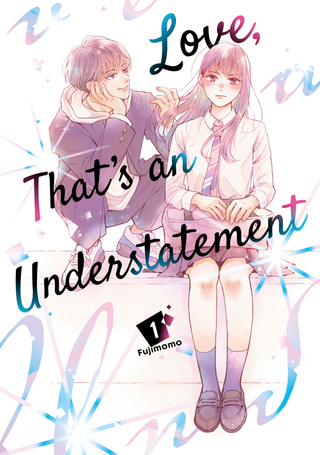
A Deep Dive into "Love, That’s an Understatement" (Museru Kurai no Ai wo Ageru)
If you are a connoisseur of modern romance manga, the name Keiko Iwashita likely rings a bell. Known for her hit series *Living-Room Matsunaga-san*, Iwashita has returned with a work that is arguably more electric, raw, and visually arresting: "Love, That’s an Understatement" (Japanese title: *Museru Kurai no Ai wo Ageru*). This series has quickly become a standout in the contemporary landscape, offering a refreshing departure from the "slow-burn" tropes that often dominate the genre.
Demographic and Context
First and foremost, it is essential to categorize this work correctly for collectors and readers. *Love, That’s an Understatement* is a Shojo manga, serialized in Kodansha’s *Dessert* magazine. While it falls under the Shojo umbrella, it leans heavily into the "Upper Shojo" or "Josei-lite" territory, focusing on university-aged protagonists rather than high schoolers. This shift in age allows for a more mature exploration of boundaries, career aspirations, and physical attraction, making it a perfect bridge for readers who want something deeper than a schoolyard crush but less cynical than a standard Seinen drama.
The Plot: A Collision of Two Worlds
The story follows Hibari, a serious, hardworking graphic design student at an art university. Hibari is the embodiment of "playing it safe." She is meticulous, follows the rules, and suppresses her own desires to meet the expectations of her professors and peers. Her life is a series of straight lines and calculated strokes—until she meets Gaku.
Gaku is the antithesis of Hibari’s structured world. A member of a band and a fellow student at the same art school, he is loud, impulsive, and unapologetically himself. Their first encounter is anything but "kawaii"; it happens in a ramen shop where Gaku’s chaotic energy immediately throws Hibari off balance. When Gaku accidentally causes a scene that involves Hibari, he doesn't just apologize—he forces his way into her life with a level of intensity that is both terrifying and magnetic.
The title, which literally translates to *"I’ll give you enough love to make you choke,"* perfectly encapsulates their dynamic. Gaku doesn't do anything halfway. Whether it’s his music, his art, or his burgeoning interest in Hibari, he is overwhelming. The narrative follows Hibari as she learns to navigate this "suffocating" affection, discovering that perhaps her rigid life was actually a cage, and Gaku is the key to breaking it open.
Key Themes: Passion, Art, and Authenticity
One of the most compelling aspects of this manga is its thematic depth regarding the creative process. Since both protagonists are art students, the manga uses their creative outputs as metaphors for their emotional states. Hibari’s art is technically perfect but lacks "soul," while Gaku’s work is messy but vibrates with life. Their relationship becomes a catalyst for artistic growth; Hibari learns to find her voice, while Gaku finds a sense of purpose and grounding.
Another central theme is the intensity of young adulthood. Unlike high school romances that focus on the "first confession," this manga explores the "aftermath" of attraction. It deals with the overwhelming nature of falling for someone who is your polar opposite. It asks the question: *How much of yourself are you willing to lose—or find—in someone else?*
Why It Stands Out
From an "otaku erudito" perspective, the artwork is a major selling point. Keiko Iwashita’s character designs are stylish and contemporary, capturing the "art school aesthetic" perfectly. The use of screentone and paneling during Gaku’s musical performances or Hibari’s design sessions creates a sense of synesthesia, where you can almost hear the bass or smell the ink.
Furthermore, the "Male Lead" archetype here is fascinating. Gaku isn't the typical "cold prince" or the "gentle childhood friend." He is a "wild card"—passionate to a fault and incredibly forward. This creates a high-tension reading experience that keeps fans coming back for every chapter.
Conclusion
*Love, That’s an Understatement* is more than just a romance; it is a vibrant exploration of what it means to live and love with 100% intensity. For fans of *Blue Period* who want more romance, or fans of *Nana* who want something slightly more optimistic, this is a must-read. It captures that fleeting, breathless moment of youth where everything feels like "too much," yet you never want it to end. If you are looking for a manga that balances aesthetic beauty with emotional weight, Hibari and Gaku’s journey is one you cannot afford to miss.
📖 Leer online en Donmanga:
➡️ Love, That's an Understatement – Leer Manga