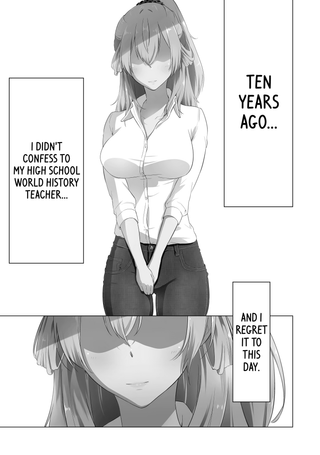
As a seasoned observer of the medium, it is always a pleasure to dissect a work that takes a familiar trope—the "forbidden" teacher-student romance—and subverts it through the lens of science fiction and temporal displacement. "I Time-Traveled and Confessed to My Teacher Crush" (known in Japan as *Time Travel shite Sensei ni Kokuhaku shita Hanashi*) is a compelling narrative that balances the bittersweet nature of unrequited love with the high-stakes consequences of altering the past.
The Premise: A Second Chance at a First Love
The story follows Haru, a high school student who harbors a deep, agonizingly silent crush on his beautiful and kind teacher, Ms. Satomi. To Haru, Satomi represents an unattainable ideal—someone who is not only his mentor but also the person who understands him best. However, the reality of their age gap and professional boundaries makes his feelings a dead end. The breaking point occurs when Haru learns that Ms. Satomi is getting married and leaving the school, effectively closing the door on his feelings forever.
In a moment of profound regret and emotional turmoil, Haru finds himself inexplicably thrust back ten years into the past. He is still a student, but there is a twist: Ms. Satomi is now his contemporary. She is no longer the mature, composed authority figure he admired; she is a high school girl, navigating the same adolescent insecurities and dreams that he once did. Armed with the knowledge of the future and the pain of his previous silence, Haru decides to do the unthinkable: he confesses his love to her immediately.
Demographic and Tone
While the premise might sound like a typical Shonen "wish-fulfillment" story, the manga is firmly rooted in the Seinen demographic. It was serialized through platforms like Kodansha’s *Comic Days*, which often caters to a more mature male audience that appreciates psychological depth and realistic emotional stakes.
The tone is not one of slapstick comedy or harem antics. Instead, it is a grounded, often melancholic exploration of nostalgia. The Seinen classification is evident in how the story handles the "Butterfly Effect." Haru isn't just trying to "get the girl"; he is grappling with the ethical dilemma of changing the life of the woman he loves. By confessing to her in the past, he is effectively erasing the future version of her that he fell in love with.
Core Themes
1. The Fluidity of Identity:
One of the most fascinating themes is the contrast between "Satomi the Teacher" and "Satomi the Student." The manga explores how much of our personality is shaped by our roles and responsibilities. Haru has to reconcile the fact that the girl in front of him is the same person he loved, yet entirely different.
2. The Burden of Future Knowledge:
Haru lives with a "spoiler" for everyone’s life. This creates a sense of isolation. He knows who will succeed, who will fail, and most importantly, the path Satomi was "supposed" to take. His struggle to decide when to intervene and when to let things play out naturally adds a layer of tension that elevates the story beyond a simple romance.
3. Regret and Redemption:
At its heart, this is a story about the "What Ifs" that haunt us. It speaks to the universal human desire to go back to a pivotal moment and speak our truth. Haru’s journey is a cathartic exercise in overcoming the fear of rejection, proving that the pain of a "no" is often lighter than the weight of "never."
Why It Stands Out
For the SEO-savvy reader and the hardcore otaku alike, this manga is a masterclass in pacing. It avoids the "will-they-won't-they" stagnation by having the confession happen almost immediately, shifting the focus to the *consequences* of that confession. The art style is clean and expressive, capturing the subtle shifts in Satomi’s expressions as she reacts to this strange, intense boy who seems to know her better than she knows herself.
In conclusion, *I
📖 Leer online en Donmanga:
➡️ I Time-Traveled and Confessed to My Teacher Crush – Leer Manga