Title: Navigating the Heart’s Complexity: A Deep Dive into "I Fell for My Friend's Older Sister + My Older Sister's Friend is Annoying"
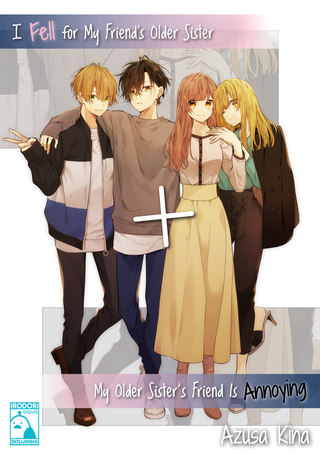
In the vast landscape of modern romantic comedy manga, few titles manage to capture the awkward, fluttering, and often hilarious nuances of adolescent infatuation as effectively as Nigo Zenigata’s dual-narrative masterpiece: *I Fell for My Friend's Older Sister + My Older Sister's Friend is Annoying* (known in Japanese as *Tomodachi no Ane ni Koishita Hanashi + Ane no Tomodachi ga Uzai Hanashi*). Originally gaining traction as a webcomic before its formal publication, this series has become a staple for fans of the "Onee-san" (older sister) trope and the "annoying-yet-charming" dynamic.
The Plot: A Tale of Two Perspectives
The manga is uniquely structured, weaving together two parallel stories that explore the intersections of friendship, family, and romance.
The first half of the narrative focuses on Akira, a high school student who finds himself hopelessly smitten with Miyako, the older sister of his best friend. This setup is a classic "forbidden fruit" scenario in the world of Shonen and Seinen rom-coms. Akira must navigate the treacherous waters of maintaining his friendship while hiding his growing feelings for a woman who is not only older but also sees him primarily as her "little brother’s cute friend." The tension arises from Akira’s internal struggle: how does one bridge the maturity gap and prove they are a man worthy of love, rather than just a kid in the eyes of their crush?
The second half of the title flips the script, focusing on Kana, a young girl who is constantly pestered by Satoshi, her older sister’s friend. Satoshi is the quintessential "annoying" male lead—playful, teasing, and seemingly oblivious to personal boundaries. However, as the story progresses, the "annoyance" begins to blur into something more profound. For Kana, the challenge is deciphering whether Satoshi’s teasing is a sign of genuine affection or merely a byproduct of his boisterous personality.
Demographics and Genre
While the series features high school protagonists, it is primarily categorized as Seinen. This demographic classification is evident in its execution; rather than relying solely on slapstick humor or over-the-top fanservice, the manga leans into the psychological and emotional realities of its characters. It is a Romantic Comedy (Rom-Com) with a heavy emphasis on Slice of Life. The pacing is deliberate, allowing readers to soak in the atmosphere of quiet afternoons, shared snacks, and the subtle shifts in body language that signal a change in a relationship’s status quo.
Main Themes: Age Gaps and the "Annoying" Dynamic
One of the core themes is the Age Gap Romance. The manga explores the inherent power imbalance and the "maturity wall" that exists when a younger person falls for someone older. It treats Akira’s feelings with a mix of humor and sincerity, highlighting the frustration of being "friend-zoned" by age itself.
Another central theme is the "Annoying" Love Interest. This is a popular trope in modern manga (similar to *Uzaki-chan Wants to Hang Out!* or *Don’t Toy with Me, Miss Nagatoro*), where conflict and chemistry are born from constant bickering. In Kana and Satoshi’s case, the "annoyance" serves as a protective layer, masking vulnerabilities and making the eventual moments of genuine connection feel much more earned.
Why You Should Read It
Nigo Zenigata’s art style is clean, expressive, and perfectly suited for a character-driven story. The character designs are distinct, and the facial expressions—ranging from Akira’s panicked blushes to Kana’s deadpan irritation—carry much of the storytelling weight.
For SEO-minded readers looking for a fresh take on the "sister's friend" or "friend's sister" subgenre, this manga is a goldmine. It avoids the darker pitfalls of the genre, opting instead for a heartwarming, relatable, and often nostalgic look at how we fall in love with the people just outside our immediate reach. Whether you are a veteran otaku or a newcomer to the rom-com scene, this series offers a double dose of romantic tension that is impossible to put down.
In conclusion, *I Fell for My Friend's Older Sister + My Older Sister's Friend is Annoying* is a brilliant exploration of the "almost-attainable" crush. It captures the essence of youth—the embarrassment, the longing, and the simple joy of spending time with someone who makes your heart race, even if they are technically "off-limits."
📖 Leer online en Donmanga:
➡️ I Fell for My Friend's Older Sister + My Older Sister's Friend is Annoying – Leer Manga