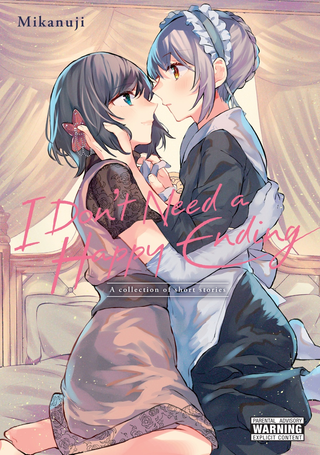
In the vast and often predictable landscape of contemporary romance manga, few works manage to capture the bittersweet nuances of adulthood as poignantly as "I Don’t Need a Happy Ending" (*Happy Ending wa Iranai*), written and illustrated by the talented Kujira. As an observer of the medium, I find this series to be a refreshing departure from the "happily ever after" tropes that dominate the genre. It is a sophisticated exploration of what it means to live for the moment when the future feels like an exhausting checklist of societal expectations.
Demographic and Context
Categorized primarily as Josei, this manga is aimed at adult women, though its themes resonate with anyone navigating the complexities of modern life. Unlike *Shojo*, which often focuses on the idealistic fervor of first loves, *Josei* allows for a more grounded, sometimes cynical, and deeply psychological approach to relationships. Published under Kodansha’s *Comic Tint*, the series leans into the "mature romance" subgenre, prioritizing emotional intimacy and the friction between personal desire and social performance.
Detailed Plot Synopsis
The story centers on Akari, a 30-year-old professional who, by all external metrics, is "winning" at life. She has a stable career as a designer and carries herself with a composed, independent aura. However, Akari is haunted by the invisible expiration date society places on women. In a culture where marriage and motherhood are often framed as the ultimate "happy ending," Akari finds herself disillusioned. She has seen the cracks in those fairy tales and has decided that she doesn't need—or perhaps doesn't want—the traditional conclusion to her story.
Her life takes an unexpected turn when she meets Umi, a man ten years her junior. Umi is a college student, working part-time, and represents everything Akari’s structured world is not: spontaneity, raw emotion, and the luxury of time. What begins as a chance encounter evolves into a complex "age-gap" relationship that defies easy categorization.
The narrative doesn't follow the typical "boy meets girl and fixes her" trajectory. Instead, it meticulously documents the push-and-pull of two people at vastly different stages of life. Akari is cautious, constantly calculating the "cost" of her feelings, while Umi’s presence forces her to confront the walls she has built around her heart. The story isn't just about whether they will end up together; it’s about Akari reclaiming her right to define what happiness looks like, even if it’s fleeting or unconventional.
Main Themes and Analysis
1. The Deconstruction of the "Happy Ending":
The title itself is a manifesto. The manga explores the "Happy Ending Syndrome"—the idea that life is a series of hurdles leading to a final, static state of bliss. Kujira argues through Akari that life is lived in the "middle," in the messy, unresolved moments. By rejecting the traditional ending, Akari opens herself up to a more authentic, albeit more vulnerable, existence.
2. The Age-Gap Dynamic and Power Shifts:
While many manga use age gaps for fanservice, *I Don’t Need a Happy Ending* uses it to highlight the disparity in societal pressure. Akari feels the weight of her 30s, while Umi is still in the "experimental" phase of his 20s. This creates a fascinating power dynamic where Akari is the mentor in life but the student in emotional honesty.
3. Career vs. Personal Identity:
The manga spends significant time in Akari’s workplace. It portrays the exhaustion of being a "competent woman" who must remain stoic to be respected. Her relationship with Umi serves as the only space where she can shed her professional skin, highlighting the isolation that often accompanies corporate success.
Visual Style and Atmosphere
Kujira’s art style is quintessential Josei: elegant, thin lines with a heavy emphasis on character expressions and "negative space" to convey loneliness. The pacing is deliberate and atmospheric, often using quiet panels to let the weight of a conversation sink in. It doesn't rely on over-the-top drama; the tension is found in a lingering look or a hesitant touch.
Conclusion
"I Don’t Need a Happy Ending" is a must-read for those who find traditional romance stories too saccharine. It is a mature, contemplative look at the fear of commitment, the beauty of temporary connections, and the courage it takes to live without a script. For the erudite otaku, this manga serves as a reminder that the most compelling stories aren't the ones that end with a wedding, but the ones that teach us how to breathe in the present.
📖 Leer online en Donmanga:
➡️ I Don't Need a Happy Ending – Leer Manga