Title: Unraveling the Tragedy Anew: A Comprehensive Guide to the Higurashi When They Cry – GOU Manga
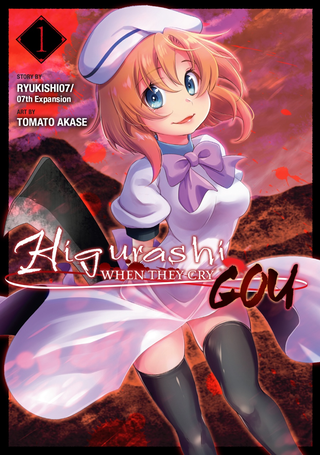
For decades, the "When They Cry" (*Higurashi no Naku Koro ni*) franchise has stood as a titan of the psychological horror genre. However, when *Higurashi When They Cry – GOU* was first announced, fans initially mistook it for a simple high-definition remake of the 2006 classic. They were wrong. Illustrated by the talented Tomato Akase and based on the original story by Ryukishi07, the *GOU* manga is a sophisticated "stealth sequel" that subverts the expectations of veteran fans while providing a terrifying entry point for newcomers.
The Plot: A Deceptive Return to Hinamizawa
The story begins in a familiar fashion. In June 1983, a young boy named Keiichi Maebara moves to the quiet, rural village of Hinamizawa. He quickly integrates into a tight-knit circle of friends: the energetic Rena Ryuugu, the tomboyish Mion Sonozaki, the mischievous Satoko Houjou, and the mysterious, soft-spoken Rika Furude. Their days are filled with innocent club activities and laughter.
However, the atmosphere shifts as the annual Watanagashi (Cotton Drifting) Festival approaches. Keiichi learns of the "Curse of Oyashiro-sama," a series of mysterious deaths and disappearances that have occurred every year on the night of the festival. While the original series focused on Keiichi’s descent into paranoia, *GOU* introduces a chilling twist. We soon realize that Rika Furude—who had previously escaped the endless cycle of June 1983—has been pulled back into the loops.
The manga follows the "Damashi" (Deception) arcs: *Onidamashi-hen*, *Watadamashi-hen*, and *Tataridamashi-hen*. These chapters mirror the original story arcs but feature subtle, disturbing deviations. Characters who were once victims become aggressors, and the "rules" that Rika thought she understood about the tragedy no longer apply. The mystery is no longer just about who is committing the murders, but why the world itself has changed.
Demographics and Genre: A Seinen Masterpiece
While the character designs might suggest a "moe" or "slice-of-life" aesthetic, *Higurashi GOU* is firmly rooted in the Seinen demographic. Published in Kadokawa's *Young Ace Up*, the manga targets an older male audience, though its complex narrative appeals to all fans of mature fiction.
The series expertly blends Psychological Horror, Supernatural Mystery, and Tragedy. Unlike Shonen titles that rely on physical battles, *GOU* focuses on the erosion of the human psyche. It utilizes the Seinen classification to explore graphic violence and deep-seated emotional trauma, ensuring that the stakes feel visceral and the consequences permanent.
Core Themes: Trust, Fate, and the Cycle of Isolation
The *GOU* manga delves deep into several philosophical and psychological themes:
1. The Fragility of Trust: At its heart, *Higurashi* is a tragedy about communication. The horror stems from the characters' inability to trust their friends due to the "Hinamizawa Syndrome"—a condition that manifests as extreme paranoia. *GOU* heightens this by showing that even with the knowledge of past loops, trust can still be weaponized or misplaced.
2. Determinism vs. Free Will: Rika Furude represents the struggle against a cruel fate. Having lived through a century of loops, her exhaustion and desperation are palpable. The manga asks: Can one truly change their destiny, or are we all puppets of a higher, more malicious force?
3. The Corruption of Innocence: The juxtaposition of the bright, rural summer setting with the gruesome reality of the murders serves to highlight the loss of childhood innocence. The "club games" the children play are a stark contrast to the life-or-death games they are forced into by the village's dark history.
Why the Manga Stands Out
Tomato Akase’s art style provides a unique flavor to the *GOU* narrative. While the anime adaptation relied on fast-paced shocks, the manga allows for a more atmospheric build-up. The facial expressions are particularly noteworthy, transitioning from cute and friendly to hauntingly distorted in a single panel. For SEO-minded readers and collectors, the *GOU* manga is an essential companion that offers deeper internal monologues and a more methodical pacing than its televised counterpart.
In conclusion, *Higurashi When They Cry – GOU* is not just a retelling; it is a reconstruction of a horror legend. It challenges the reader to solve a puzzle where the pieces are constantly changing shape, making it a must-read for anyone who appreciates a story that rewards keen observation and emotional investment. Welcome back to Hinamizawa—just don't expect to leave with your sanity intact.
📖 Leer online en Donmanga:
➡️ Higurashi When They Cry – GOU – Leer Manga