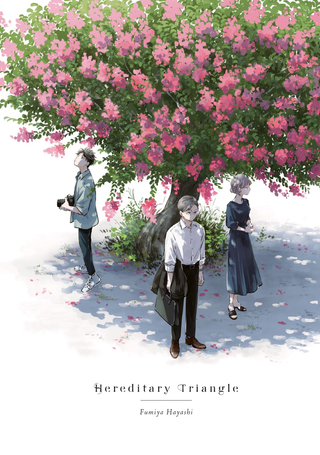
Hereditary Triangle: A Deep Dive into the Labyrinth of Family Secrets and Psychological Tension
In the vast landscape of contemporary Seinen manga, few titles manage to balance domestic discomfort with psychological intrigue as effectively as *Hereditary Triangle* (known in Japan as *Iden no Sankaku*). Written and illustrated by the talented Shunsuke Soraya, this work stands as a testament to the "slow-burn" psychological thriller, weaving a narrative that is as much about the shadows of the past as it is about the fragility of the present. For those seeking a story that transcends simple tropes and dives into the murky waters of human obsession, this manga is an essential read.
The Demographic and Context
*Hereditary Triangle* is firmly rooted in the Seinen demographic. Serialized in Kodansha’s *Young Magazine*, it targets an adult male audience, though its complex emotional architecture appeals to anyone who enjoys mature, character-driven dramas. Unlike Shonen titles that rely on external conflict and power scaling, *Hereditary Triangle* finds its tension in the unspoken words between family members and the claustrophobic atmosphere of a home built on secrets.
The Plot: A Fragile Domesticity
The story centers on Haru, a young man whose life appears, at least on the surface, to be relatively stable. He lives with his mother, Reiko, and his younger sister, Mana. However, the "triangle" referenced in the title is not a traditional romantic trope; it is a complex, shifting geometric shape formed by the three members of this household.
The narrative engine is ignited by the weight of "heredity"—not just in a biological sense, but in the psychological baggage passed down through generations. Haru is a protagonist caught in a state of perpetual observation. He is acutely aware of the strange, almost suffocating intensity of his mother’s affection and the growing distance (or perhaps hidden closeness) of his sister.
As the story progresses, the arrival of external influences and the resurfacing of long-buried family history begin to crack the veneer of their daily lives. The manga masterfully explores the idea of the "ideal family" and systematically deconstructs it. Why does Reiko act the way she does? What is the true nature of the bond between the siblings? The plot moves with a deliberate pace, ensuring that every revelation feels earned and every moment of tension is palpable.
Main Themes: The Weight of the Bloodline
The thematic core of *Hereditary Triangle* revolves around the cycle of obsession and the burden of legacy.
1. The Taboo and the Transgressive: Soraya does not shy away from the "taboo" elements often found in psychological Seinen. The manga explores the blurring lines of familial love and how isolation can distort one’s perception of boundaries. It asks the reader: where does protection end and control begin?
2. Psychological Manipulation: Much of the conflict is internal. The characters often engage in a subtle "cold war" of emotions, using guilt, affection, and silence as weapons. The "Triangle" represents a closed system where any change in one person’s behavior forces a radical shift in the others.
3. The Ghost of the Past: The "Hereditary" aspect of the title suggests that the characters are not entirely in control of their destinies. They are haunted by the choices of their predecessors, suggesting a deterministic view of trauma where the sins of the parents are inevitably visited upon the children.
Visual Storytelling and Atmosphere
Shunsuke Soraya’s art style is instrumental in conveying the manga’s tone. The character designs are grounded and realistic, which makes the moments of psychological distortion feel even more jarring. The use of shadow and framing often creates a sense of voyeurism; the reader feels like an intruder in this private, tense household. The "ecchi" elements, while present, are rarely used for simple fan service; instead, they serve to heighten the sense of vulnerability and the transgressive nature of the characters' relationships.
Conclusion
*Hereditary Triangle* is a masterclass in building unease. It is a manga that demands your full attention, as the most significant developments often happen in the subtext of a conversation or the lingering look in a character's eyes. For fans of psychological dramas like *The Flowers of Evil (Aku no Hana)* or *Blood on the Tracks (Chi no Sakume)*, this series offers a fresh yet equally disturbing exploration of the human psyche. It is a haunting reminder that the people who know us best are often the ones capable of hurting us the most.
📖 Leer online en Donmanga:
➡️ Hereditary Triangle – Leer Manga