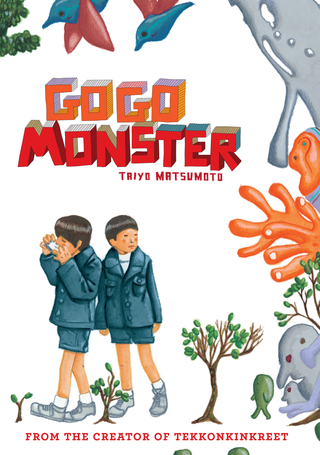
As an aficionado of the medium, it is a privilege to delve into the surreal, avant-garde world of Taiyo Matsumoto. While many recognize him for the kinetic energy of *Tekkonkinkreet* or the sports-drama intensity of *Ping Pong*, his 2000 masterpiece, GoGo Monster, stands as perhaps his most introspective and hauntingly beautiful work. This standalone graphic novel is a cornerstone of the Seinen demographic, pushing the boundaries of what manga can achieve as a literary and visual art form.
The Plot: A World Divided by the Unseen
At the heart of *GoGo Monster* is Yuki Tachibana, a third-grade boy who exists on the periphery of his school’s social ecosystem. To his classmates and teachers, Yuki is "strange"—a boy who talks to walls, skips class to hide in the botanical garden, and makes cryptic claims about "the others." Yuki insists that his school is inhabited by supernatural beings—monsters that live in the unseen spaces, particularly on the mysterious third floor.
The narrative tension begins to tighten when Yuki senses a shift in the supernatural balance. He believes that "bad" monsters are beginning to infiltrate the school, threatening the peaceful spirits he has befriended. His world is further complicated by the arrival of Makoto, a grounded, pragmatic transfer student who becomes Yuki’s only bridge to the "normal" world.
As the story progresses, we are introduced to "IQ," a mysterious older student who wears a box over his head and has remained in the school for years, seemingly trapped in the same liminal space as Yuki. Together, these characters navigate a school year that feels less like a series of lessons and more like a battle for the soul of childhood imagination.
Demographics and Style
Though its protagonists are children, *GoGo Monster* is firmly categorized as Seinen. It was published by Shogakukan and targets an adult audience capable of appreciating its slow-burn pacing, psychological depth, and experimental art. Matsumoto eschews the traditional "moe" or "shonen" aesthetics for a style influenced by European comics (bande dessinée), featuring scratchy, expressive lines and distorted perspectives that perfectly mirror Yuki’s fractured perception of reality.
Main Themes: The Fragility of Childhood
The core theme of *GoGo Monster* is the painful transition from childhood to maturity. Yuki represents the "pure" child who can still see the magic and terror of the world. However, Matsumoto treats this gift as a burden. Yuki’s ability to see the monsters isolates him, turning his childhood into a period of profound loneliness.
Another pivotal theme is Perception vs. Reality. The manga never explicitly confirms whether the monsters are literal supernatural entities or manifestations of Yuki’s psychological state and his fear of growing up. This ambiguity is the "Seinen" heart of the book; it asks the reader to consider if the loss of our "monsters"—our imagination and wonder—is a necessary part of becoming a functional adult, or a tragic surrender to a mundane existence.
The character of Makoto serves as a foil to Yuki, representing the "rational" world. Through their friendship, Matsumoto explores the theme of Empathy. Makoto doesn't need to see the monsters to care for Yuki; he simply accepts Yuki’s reality, suggesting that human connection is the only thing that can anchor us when our world starts to feel alien.
Why It’s a Must-Read
*GoGo Monster* is not just a manga; it is a sensory experience. It captures the specific, eerie atmosphere of a school after hours—the long shadows in the hallways and the feeling that something is watching from the rooftop. For any SEO-conscious collector or literary enthusiast, this title is a prime example of "Gekiga" evolution, offering a story that lingers in the mind long after the final page is turned. It is a melancholic, visual poem about the moment we stop being children and the ghosts we leave behind in the playground.
📖 Leer online en Donmanga:
➡️ GoGo Monster – Leer Manga