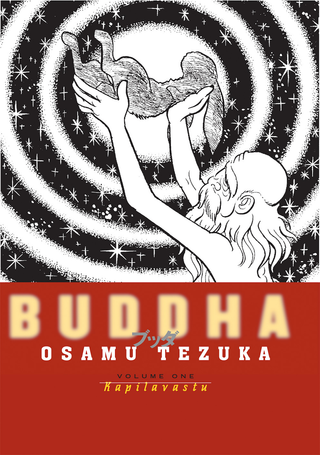
Osamu Tezuka’s Buddha: A Masterpiece of Philosophical Storytelling
When discussing the "God of Manga," Osamu Tezuka, most casual fans immediately point to *Astro Boy* or *Black Jack*. However, for the seasoned otaku and the literary scholar alike, his magnum opus is arguably Buddha. Serialized between 1972 and 1983, this epic reimagining of the life of Siddhartha Gautama is not merely a biographical account; it is a sprawling, cinematic exploration of the human condition, blending historical fact with Tezuka’s signature whimsical fiction and profound philosophical inquiry.
Demographic and Context
While *Buddha* was originally serialized in *Kibō no Tomo* (a magazine primarily aimed at a Shonen/young male audience), its complexity, graphic depictions of violence, and deep existential themes have led modern critics to categorize it firmly as Seinen (adult) or "Philosophical Shonen." It is a work that matured alongside its creator, reflecting Tezuka’s lifelong obsession with the sanctity of life.
The Plot: From Prince to Pathbreaker
The narrative begins long before the birth of the protagonist, setting the stage in ancient India—a land fractured by warring kingdoms and a rigid, oppressive caste system. Tezuka introduces us to a world where the Brahmin (priests) hold absolute power, while the Pariahs and Sudras (servants) live in abject misery.
The story follows the journey of Siddhartha Gautama, the prince of the Shakya clan. Born into a life of unimaginable luxury in the city of Kapilavastu, Siddhartha is prophesied to become either a great world ruler or a spiritual savior. Despite his father’s desperate attempts to shield him from the "ugliness" of the world, Siddhartha’s inquisitive nature leads him to witness the "Four Sights": old age, sickness, death, and an ascetic monk.
Tezuka masterfully weaves Siddhartha’s personal awakening with the lives of fictional characters who represent the various facets of human suffering. We meet Tatta, a wild boy with the supernatural ability to possess animals; Chapra, a slave who attempts to defy the caste system by posing as a noble general; and Bandaka, a ruthless warrior who serves as a foil to Siddhartha’s growing pacifism. These parallel narratives provide a gritty, grounded perspective on the social injustices of the era, making Siddhartha’s eventual renunciation of his throne feel not just like a religious choice, but a moral necessity.
As Siddhartha abandons his wife and child to seek the truth, the manga transitions into a grueling psychological and physical odyssey. He undergoes years of extreme asceticism, nearly starving himself to death, before realizing that the path to enlightenment lies in the "Middle Way"—a balance between indulgence and self-mortification.
Major Themes: The Interconnectedness of Life
The central pillar of *Buddha* is the sanctity of all living things. Tezuka uses his "Star System" (reusing character designs across different works) to create a sense of familiarity and universality. The manga explores the concept of Samsara (the cycle of birth and death) and the idea that every action ripples through the universe.
Another dominant theme is the critique of institutionalized discrimination. Through the lens of the Indian caste system, Tezuka mirrors modern social struggles, illustrating how ego and the thirst for power lead to systemic cruelty. Siddhartha’s journey is one of shedding the "ego" to find compassion for all beings, from the lowliest insect to the most tyrannical king.
Why It Is a Must-Read
Visually, *Buddha* is a masterclass in "cinematic manga." Tezuka employs experimental panel layouts, slapstick humor (to break the tension of heavy scenes), and breathtaking landscapes that capture the spiritual majesty of the Ganges.
For any reader looking for a story that transcends the medium, *Buddha* offers a profound experience. It is a historical epic, a political drama, and a spiritual guide all rolled into one. It doesn't ask you to become a Buddhist; it asks you to look at the world with more empathy. In the vast library of manga history, few works are as essential, as moving, or as timeless as Osamu Tezuka’s *Buddha*.
📖 Leer online en Donmanga:
➡️ Buddha – Leer Manga