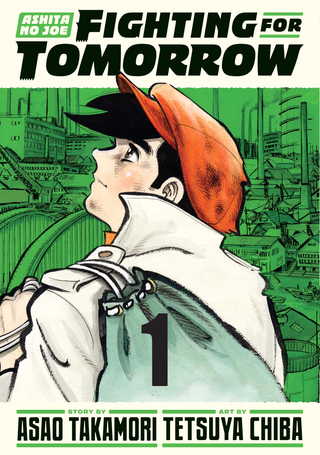
Ashita no Joe: The Eternal Flame of the Underdog
In the pantheon of manga history, few titles carry the cultural weight and emotional gravity of *Ashita no Joe* (Tomorrow's Joe). Written by Ikki Kajiwara (under the pseudonym Asao Takamori) and illustrated by the legendary Tetsuya Chiba, this series is not merely a sports story; it is a profound social commentary and a character study that defined a generation. Published between 1968 and 1973 in *Weekly Shōnen Magazine*, it remains the definitive boxing epic that transcended its medium to become a symbol of the Japanese working class.
The Plot: From the Slums to the Ring
The story follows Joe Yabuki, a wandering, cynical, and highly aggressive orphan who drifts into the Doya-gai—the impoverished slums of Tokyo. Joe is not your typical shonen protagonist; he is rude, dishonest, and prone to violence. However, his raw fighting talent catches the eye of Danpei Tange, a former boxer turned washed-up alcoholic coach. Danpei sees in Joe the "Tomorrow" he lost for himself, offering to train him in exchange for Joe cleaning up his act.
Joe initially scoffs at the idea, using Danpei’s teachings only to further his delinquent lifestyle, which eventually lands him in a juvenile detention center. It is within the cold walls of the reformatory that the story shifts from a gritty urban drama to a legendary sports saga. Here, Joe meets Toru Rikiishi, a boxing prodigy whose discipline and stoicism stand in stark contrast to Joe’s wild nature. Their rivalry becomes the catalyst for Joe’s transformation. For the first time, Joe finds a reason to look toward "Tomorrow," realizing that the ring is the only place where he can truly exist. The narrative follows Joe’s grueling ascent through the professional boxing world, battling internal demons, physical trauma, and world-class opponents in a relentless pursuit of self-actualization.
Demographics and Genre: A Shonen with a Seinen Soul
While *Ashita no Joe* is officially classified as Shonen (aimed at young males), its complexity, dark themes, and psychological depth often blur the lines with Seinen (adult) fiction. It was born during a period of intense social upheaval in Japan, and its gritty realism resonated deeply with university students and blue-collar workers. Unlike modern sports manga that often focus on the "power of friendship," *Ashita no Joe* is a solitary, often tragic journey. It treats boxing not as a game, but as a sacrificial rite where the price of glory is often one’s own humanity and health.
Main Themes: The Philosophy of the "White Ash"
The core of *Ashita no Joe* is built upon several heavy thematic pillars:
1. Social Inequality and the Underclass: The setting of the Doya-gai is crucial. Joe represents the disenfranchised youth who have been abandoned by society. His struggle in the ring is a metaphor for the struggle to survive in a world that offers no safety net.
2. The Nature of Rivalry: The relationship between Joe and Rikiishi is one of the most celebrated in manga history. It isn't based on hatred, but on mutual respect and the obsessive need to prove one's worth. This rivalry pushes both characters to extreme, often self-destructive lengths.
3. The "Tomorrow" (Ashita): The title itself is ironic and aspirational. For Joe, "Tomorrow" isn't a promise of happiness; it’s a goal that requires burning oneself out completely today.
4. Burning Out into White Ash: Perhaps the most famous theme of the series is Joe’s philosophy of life. He describes his desire to burn so brightly and intensely that nothing remains but "pure white ash." This rejection of a long, mediocre life in favor of a short, brilliant explosion of passion is what makes Joe Yabuki one of the most tragic and compelling icons in fiction.
Conclusion
*Ashita no Joe* is a masterpiece of visual storytelling. Tetsuya Chiba’s art evolves from simple lines to incredibly detailed, visceral depictions of physical exhaustion and psychological turmoil. For any fan of the medium, this is essential reading. It is a haunting, beautiful, and brutal exploration of what it means to give everything to a single purpose. Joe Yabuki didn't just fight for a title; he fought for the right to say he existed. Even decades later, the embers of his journey continue to glow in the hearts of readers worldwide.
📖 Leer online en Donmanga:
➡️ Ashita no Joe – Fighting for Tomorrow – Leer Manga