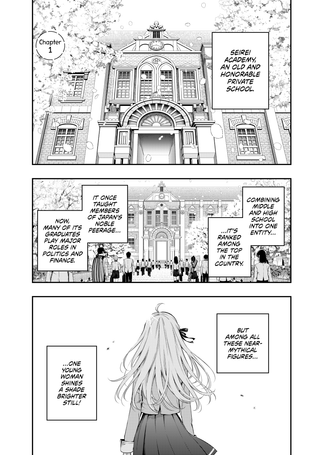
As a seasoned connoisseur of the medium, it is a pleasure to dissect one of the most refreshing romantic comedies to hit the shelves in recent years: "Alya Sometimes Hides Her Feelings in Russian" (known in Japan as *Tokidoki Bosotto Roshiago de Dereru Tonari no Alya-san*, or simply *Roshidere*). Originally a light novel series by SunSunSun, its manga adaptation, illustrated by the talented Saho Tenamachi, has captured the hearts of readers worldwide with its exquisite art and charming character dynamics.
Demographic and Genre
Categorized primarily as a Shonen manga, *Roshidere* is serialized in Kodansha’s *Magazine Pocket*. While the "school rom-com" genre is saturated, this series distinguishes itself through its high-production-value character designs and a linguistic gimmick that adds a layer of psychological playfulness rarely seen in standard high school dramas.
The Synopsis: A Linguistic Game of Love
The story centers on Alisa Mikhailovna Kujou, affectionately known as Alya. She is the "Silver Princess" of Seirei Academy—a half-Russian, half-Japanese girl of ethereal beauty, top-tier academic standing, and an intimidatingly cold demeanor. To her classmates, she is an unreachable idol. However, she shares a desk next to Masachika Kuze, a seemingly unmotivated, sleep-deprived boy who represents everything Alya’s disciplined nature finds frustrating.
The "hook" of the narrative lies in Alya’s secret habit. Whenever she is around Masachika, she finds herself overwhelmed by feelings she cannot express in Japanese due to her pride and "tsundere" tendencies. To vent her affection, frustration, or embarrassment, she mutters sweet nothings and flirtatious remarks in Russian. She believes that Masachika, like everyone else in the school, has no idea what she is saying.
The twist? Masachika is actually fluent in Russian. Having grown up watching Russian films and interacting with a childhood friend, he understands every single "I love you," "You’re cute," and "Look at me" that Alya whispers. For the sake of social harmony—and perhaps to enjoy the spectacle—Masachika pretends to be clueless, leading to a hilarious and heartwarming "double life" where Alya thinks she is keeping her heart safe while Masachika is secretly dying of embarrassment from her bluntness.
Plot Progression and Supporting Cast
While the initial chapters focus on the comedic "translation" gag, the plot quickly expands into the realm of school politics. Alya harbors the ambition to become the Student Council President, a goal that requires popularity and strategic alliances. Masachika, despite his lazy exterior, is a former "prodigy" with deep ties to the school’s elite families. He decides to step out of the shadows to become Alya’s "support," helping her navigate the treacherous waters of student elections and social hierarchies.
The manga introduces a vibrant supporting cast, most notably Yuki Suou, Masachika’s "childhood friend" (whose true relationship with him provides a significant narrative shock), and members of the Student Council who challenge Alya’s perfectionist worldview.
Main Themes
1. The "Gap Moe" Phenomenon: The series thrives on the contrast between Alya’s public persona (the "Ice Princess") and her private vulnerability. It explores how people wear masks to meet societal expectations.
2. Communication and Barriers: The Russian language serves as a metaphor for the walls we build around our hearts. Even when the words are understood, the *intent* and the courage to say them in a shared language remain the ultimate hurdle.
3. Growth and Ambition: Beyond the romance, it is a story about Masachika regaining his drive and Alya learning that she doesn't have to be perfect to be worthy of leadership or love.
Why You Should Read It
For any fan of *Kaguya-sama: Love is War* or *Kubo Won't Let Me Be Invisible*, this manga is a must-read. The art style is remarkably clean, emphasizing the expressive "dere" (sweet) moments that contrast with the sharp, comedic timing. It is a sophisticated take on the "will-they-won't-they" trope, fueled by a linguistic secret that keeps the tension perpetually high.
In conclusion, *Alya Sometimes Hides Her Feelings in Russian* is more than just a gimmick; it is a beautifully illustrated journey of two teenagers navigating the complexities of identity, language, and the terrifying prospect of being truly understood.
📖 Leer online en Donmanga:
➡️ Alya Sometimes Hides Her Feelings in Russian – Leer Manga