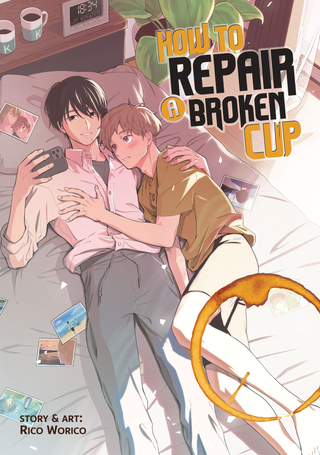
In the vast landscape of contemporary Josei manga, few creators possess the surgical precision for emotional storytelling quite like Natsuki Kizu. While she is globally celebrated for her hit series *Given*, her more intimate, grounded work like "How to Repair a Broken Cup" (*Kowareta Cup no Naoshikata*) stands as a testament to her ability to find profound beauty in the mundane. As an otaku who has spent decades analyzing the nuances of character-driven narratives, I find this particular one-shot (and its surrounding stories) to be a masterclass in the "healing" subgenre.
The Plot: A Fragile Connection
The story follows Sayo, a woman in her late twenties who is navigating the suffocating pressures of a high-stress corporate environment. Sayo is the quintessential modern professional: efficient, composed, but internally fraying at the edges. Her life is a cycle of deadlines and exhaustion until a literal and metaphorical "break" occurs.
While visiting a quiet, unassuming café to escape the noise of her life, Sayo accidentally breaks a ceramic cup. This moment of clumsiness serves as the catalyst for the entire narrative. Enter Kento, a younger man working at the café who approaches the accident not with frustration, but with a gentle, philosophical curiosity. Instead of discarding the shards, he speaks of the art of repair.
The manga follows the slow, deliberate development of their relationship. It isn't a high-octane romance filled with dramatic confessions; rather, it is a series of quiet interactions centered around the process of fixing what is broken. As Kento teaches Sayo about the philosophy of *Kintsugi*—the Japanese art of repairing broken pottery with gold lacquer—Sayo begins to realize that her own "cracks," her burnout, and her past failures do not make her worthless. Instead, they are parts of her history that can be integrated into a stronger, more beautiful version of herself.
Demographic and Genre: The Josei Perspective
"How to Repair a Broken Cup" is firmly rooted in the Josei demographic. Unlike Shonen or Shojo, which often rely on idealized tropes or heightened escapism, Josei focuses on the realistic lived experiences of adult women. The pacing is deliberate, mirroring the slow passage of time in a real-world recovery process. It captures the specific "quarter-life crisis" anxiety that resonates with readers who feel they must maintain a perfect facade in their professional and social lives.
Main Themes: Kintsugi and Emotional Resilience
The central theme of the manga is undoubtedly Kintsugi as a metaphor for the human soul. Kizu-sensei explores the idea that "repair" does not mean returning something to its original, pristine state. In the world of this manga, the scars are the point. The gold used to join the pieces makes the object more valuable than it was before it broke.
Another prominent theme is the subversion of age-gap tropes. While there is an age difference between the weary professional Sayo and the more idealistic Kento, the story avoids the predatory or overly stylized clichés often found in other genres. Instead, it focuses on the exchange of perspectives: Sayo provides the reality of adulthood, while Kento provides the space for emotional vulnerability.
Finally, the manga tackles burnout and corporate alienation. It critiques a society that views individuals as disposable tools—much like a cheap ceramic cup. By choosing to repair the cup, the characters reclaim their agency and assert that value is inherent, not just functional.
Why It’s a Must-Read
For fans of Natsuki Kizu, her signature art style—characterized by clean lines, expressive eyes, and a masterful use of negative space—is on full display here. The visual storytelling is so potent that even the silent panels, where characters simply observe the steam rising from a cup or the light hitting a crack in the porcelain, carry immense emotional weight.
"How to Repair a Broken Cup" is a poignant, sophisticated piece of literature that transcends the medium of manga. It is a quiet reminder that being "broken" is not the end of one's story, but the beginning of a more refined chapter. If you are looking for a narrative that feels like a warm blanket and a deep conversation at 2:00 AM, this is the series to add to your collection.
📖 Leer online en Donmanga:
➡️ How to Repair a Broken Cup – Leer Manga