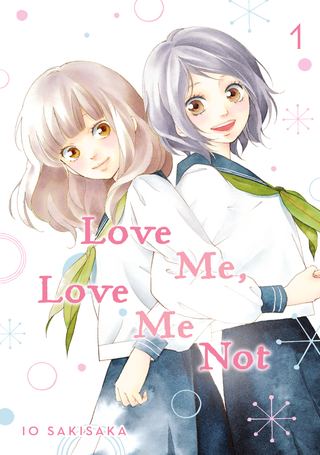
Greetings, fellow manga enthusiasts. If you are a connoisseur of the "Shojo" genre, the name Io Sakisaka undoubtedly resonates with a certain poetic weight. Known for her masterful ability to capture the fleeting, bittersweet essence of youth in works like *Strobe Edge* and *Blue Spring Ride*, Sakisaka reached a narrative pinnacle with her series "Love Me, Love Me Not" (Japanese title: *Omoi, Omoware, Furi, Furare*).
As an expert in the medium, I can attest that this series is not merely a "high school romance." It is a sophisticated exploration of emotional maturity, communication, and the diverse ways human beings perceive affection.
The Premise: A Tale of Two Perspectives
The story centers on two girls with diametrically opposed philosophies on love. Yuna Ichigyo is a quintessential dreamer—a shy, idealistic girl who waits for a fairy-tale romance to sweep her off her feet. In contrast, Akari Yamamoto is a pragmatic realist. She views love as a choice influenced by social dynamics and physical attraction, often prioritizing logic over pure sentiment.
Their lives intersect by chance at a train station, leading to an unlikely friendship. However, the plot thickens when they realize they live in the same apartment complex and attend the same high school. The emotional landscape becomes even more intricate with the introduction of two boys: Rio Yamamoto, Akari’s handsome and popular stepbrother, and Kazuomi Inui, Yuna’s childhood friend who is as straightforward as he is oblivious to the romantic tensions surrounding him.
The Demographics and Genre
*Love Me, Love Me Not* is a definitive Shojo manga. It was serialized in Shueisha's *Bessatsu Margaret*, the gold standard for magazines targeting young female readers. However, its psychological depth and nuanced character writing often appeal to the Josei (older female) and even Seinen (young male) demographics who appreciate character-driven dramas over simple tropes. It fits perfectly within the Slice of Life and School Romance genres, but it elevates these categories through its focus on internal growth rather than just external "will-they-won't-they" antics.
A Complex Web of Unrequited Feelings
The brilliance of the narrative lies in its "love square." Yuna finds herself falling for Rio, who resembles the "prince" of her dreams. However, Rio harbors his own complicated feelings regarding his family situation and his bond with Akari. Meanwhile, Akari finds herself drawn to the blunt honesty of Kazuomi, a boy who seems to have no interest in the games of romance.
Unlike many series that rely on misunderstandings to prolong the plot, Sakisaka uses these conflicts to force her characters to evolve. Yuna must learn that real love requires courage and stepping out of one's comfort zone, while Akari must learn that being "realistic" is often a defense mechanism to avoid getting hurt.
Main Themes: More Than Just Heartbeats
1. The Subjectivity of Love: The Japanese title (*Omoi, Omoware, Furi, Furare*) translates roughly to *"Thinking, Being Thought Of, Shaking Off, and Being Shaken Off."* This reflects the four states of unrequited and requited love. The manga explores how love is experienced differently by everyone—some see it as a destiny, others as a burden, and some as a slow-burning friendship.
2. Family Dynamics: A significant portion of the plot deals with the "blended family" trope. The relationship between Akari and Rio is handled with extreme delicacy, focusing on the social stigma and the emotional confusion of becoming siblings as teenagers.
3. Self-Discovery and Identity: Beyond the romance, each character struggles with their future. Kazuomi, in particular, deals with the pressure of parental expectations versus his own hidden passions, a theme that resonates deeply with the "coming-of-age" experience.
Why You Should Read It
With Sakisaka’s signature soft, expressive art style—characterized by delicate lines and emotive eyes—*Love Me, Love Me Not* is a visual and emotional feast. It is a series that respects its characters' intelligence and, by extension, the reader's. If you are looking for a story that captures the precise moment a girl becomes a woman and a boy becomes a man through the lens of their first true heartbreaks and triumphs, this is a mandatory addition to your collection. It is a poignant reminder that in the world of love, there are no losers—only people learning how to be human.
📖 Leer online en Donmanga:
➡️ Love Me, Love Me Not – Leer Manga