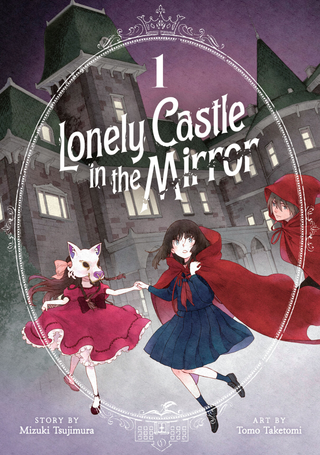
As an expert in the medium, it is a pleasure to dissect a work as emotionally resonant and structurally intricate as "Lonely Castle in the Mirror" (*Kagami no Kojou*). Originally a beloved novel by Mizuki Tsujimura, the manga adaptation—illustrated with delicate precision by Tomo Taketomi—is a masterclass in psychological storytelling. While its premise might initially suggest a whimsical "isekai" fantasy, it is, in reality, a grounded and poignant exploration of adolescent trauma and the systemic pressures of the Japanese school system.
The Premise: A Sanctuary Beyond the Glass
The story centers on Kokoro Anzai, a first-year middle school student who has become a "shut-in" (hikikomori). Paralyzed by the trauma of severe bullying, Kokoro finds herself unable to step foot in her school, spending her days in a state of quiet, suffocating isolation within her bedroom. Her life changes when her bedroom mirror begins to glow with an ethereal light.
Upon touching the glass, she is pulled into a magnificent, Western-style castle perched on a lonely island in the middle of a vast sea. There, she meets six other teenagers—Aki, Fuuka, Rion, Masamune, Ureshiro, and Subaru—and a mysterious, commanding figure in a wolf mask known as the Wolf Queen (Ookami-sama).
The Rules of the Game
The Wolf Queen presents the seven children with a challenge: hidden within the castle is a "Wishing Room." Whoever finds the key to this room will be granted a single wish—any wish their heart desires. However, there are strict rules. The castle is only accessible between 9:00 AM and 5:00 PM. If anyone remains inside past the five o'clock chime, they will be hunted and eaten by a wolf as punishment for all seven members. The game has a time limit of one year; if the key is not found by March 30th, the castle will close its doors forever.
Demographic and Genre: A Seinen Psychological Drama
While the art style possesses a soft, almost shojo-like elegance, *Lonely Castle in the Mirror* is categorized as Seinen (published in Shueisha’s *Ultra Jump*). This demographic classification is crucial because the manga does not shy away from the darker, more complex nuances of the human psyche. It avoids the typical "power fantasy" tropes of the Shonen genre, focusing instead on the slow, painful process of healing and the intricate social dynamics of outcasts. It is a psychological drama with supernatural elements used as a metaphor for the characters' internal struggles.
Core Themes: The Weight of Silence
The narrative’s greatest strength lies in its thematic depth. The primary theme is "Futoukou" (School Refusal). Through the diverse cast, the manga explores the various reasons why children fall out of the education system—ranging from bullying and academic pressure to domestic issues and the feeling of being "different."
Another central theme is Empathy and Connection. As the seven protagonists spend their days in the castle, they realize they share a common bond: none of them are attending school. The castle becomes a "third place"—a sanctuary that is neither home nor school—where they can exist without judgment. The mystery of *why* these specific seven were chosen drives the plot, leading to a profound revelation about the nature of support systems and the invisible threads that connect people across time and space.
Why You Should Read It
*Lonely Castle in the Mirror* is a hauntingly beautiful work that treats the pain of youth with the respect it deserves. It is a story about the courage it takes to open a door—or a mirror—when the world has told you to stay hidden. For fans of "A Silent Voice" or "March Comes in Like a Lion," this manga offers a similarly cathartic experience. It is a mystery, a fairy tale, and a psychological study all wrapped into one, reminding us that even in our loneliest moments, we are rarely as alone as we feel.
📖 Leer online en Donmanga:
➡️ Lonely Castle in the Mirror – Leer Manga