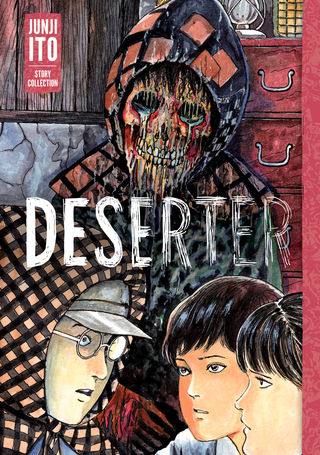
Greetings, fellow connoisseurs of the macabre and the avant-garde. As an observer of the medium for decades, it is my distinct pleasure to dissect a foundational piece of horror history. Today, we delve into "Deserter: Junji Ito Story Collection," a curated anthology that serves as a chronological window into the formative years of the undisputed master of cosmic and body horror, Junji Ito.
The Genesis of a Nightmare: An Overview
Released as part of VIZ Media’s deluxe hardcover line, *Deserter* compiles some of Ito’s earliest works, originally published between 1987 and 1991. For the erudite otaku, this collection is more than just a series of scares; it is a laboratory where Ito refined the tropes that would later define masterpieces like *Uzumaki* and *Tomie*.
The collection is categorized under the Seinen demography. While horror often straddles the line between Shonen and Seinen, *Deserter* firmly plants its feet in the latter. It eschews the "battle" tropes of youth-oriented manga in favor of psychological erosion, existential dread, and the cruel complexities of the human condition. These stories were primarily serialized in magazines like *Monthly Halloween*, targeting an audience that craved a more sophisticated, visceral brand of terror.
A Glimpse into the Abyss: Plot Summaries
As an anthology, *Deserter* contains several standalone tales, each exploring a different facet of the grotesque.
The titular story, "Deserter," is perhaps the most psychologically harrowing. Set in the aftermath of World War II, it follows a family who hides a young army deserter in their attic. However, there is a sinister catch: the family convinces him that the war is still raging long after the surrender, trapping him in a perpetual state of terror and isolation. It is a masterful study of collective cruelty and the weight of a lie.
In "Bio House," we see Ito’s early fascination with the "gross-out" factor. A young woman is invited to dinner by her eccentric boss, only to discover his appetite for the truly repulsive. This story highlights Ito’s ability to transform the mundane act of eating into a stomach-churning spectacle of body horror.
"Face Thief" introduces us to a girl who literally begins to take on the facial features of those around her. It serves as a chilling metaphor for social conformity and the loss of identity in a crowded society. Meanwhile, "Where the Sandman Lives" explores the terror of the subconscious, as a man becomes convinced that his dream-self is trying to pull his physical body into a distorted, nightmare realm.
Core Themes: The Architecture of Fear
The brilliance of *Deserter* lies in its thematic depth. Ito does not rely solely on jump scares; he builds a foundation of Psychological Displacement. His characters are often victims of their own obsessions or the inexplicable whims of a cruel universe.
1. Guilt and Retribution: Many stories revolve around the idea that the past is never truly buried. Whether it is a literal ghost or a psychological manifestation, guilt in Ito’s world is a physical force that deforms the reality of the protagonist.
2. The Fragility of the Human Form: Even in these early works, Ito’s obsession with Body Horror is evident. He treats the human body as something malleable and unreliable—skin can stretch, faces can melt, and biology can betray you at any moment.
3. Isolation in Plain Sight: A recurring Seinen theme here is the loneliness of the individual within a family or a crowd. The horror often stems from the people closest to the victim—parents, bosses, or neighbors—turning into monsters or enablers of suffering.
Artistic Evolution
For the collector, *Deserter* is a fascinating study of Ito’s artistic growth. The linework is rawer and more experimental than his later, more polished works. There is a "dirty" aesthetic to the shading that enhances the claustrophobic atmosphere of the stories. You can see him testing the limits of the page, learning how to use the "page turn" to maximize the impact of a grotesque reveal.
Conclusion
"Deserter: Junji Ito Story Collection" is an essential acquisition for any serious manga scholar. It captures a genius in his primordial state, carving out the niche that would eventually make him a global icon. It is a grim, beautiful, and deeply unsettling journey through the dark corridors of the human mind. If you wish to understand where the modern "Ito-esque" style began, you must look no further than these haunting pages. Proceed with caution, for once you enter Ito’s world, your perception of the "normal" will be forever altered.
📖 Leer online en Donmanga:
➡️ Deserter – Junji Ito Story Collection – Leer Manga