The Extraordinary Absurdity of the Mundane: A Deep Dive into Keiichi Arawi’s *Nichijou*
In the vast landscape of the *Slice of Life* genre, few titles have achieved the cult status and artistic reverence of Nichijou (literally translated as "Everyday Life"). Created by the visionary mangaka Keiichi Arawi, this series first began its serialization in Kadokawa Shoten’s *Monthly Shōnen Ace* in 2006. While its title suggests a quiet, rhythmic portrayal of daily routines, *Nichijou* is anything but ordinary. It is a masterclass in surrealism, slapstick comedy, and the celebration of the bizarre moments that hide within our "normal" lives.
Plot Overview: A Tale of Two Worlds
*Nichijou* does not follow a traditional linear narrative. Instead, it operates as a series of interconnected vignettes focusing on two primary groups of characters whose lives eventually intertwine in the most unexpected ways.
The first group consists of three high school friends: Yuuko Aioi, the energetic and often dim-witted "idiot" of the group; Mio Naganohara, a talented aspiring manga artist with a hidden temper and a secret stash of *yaoi* drawings; and Mai Minakami, a stoic, multi-talented girl whose deadpan humor and unpredictable pranks often leave her friends in a state of existential crisis. Their segments revolve around the struggles of school life—failing tests, trying to be "cool," or the simple, agonizing tension of a joke that falls flat.
The second group resides in the Shinonome Household. Here we meet Nano, a high-school-aged robot girl who desperately wants to be "normal" despite the massive, rotating wind-up key on her back. She lives with her creator, Hakase (The Professor), an eight-year-old genius who is as brilliant as she is bratty, and Sakamoto, a black cat who wears a red scarf that allows him to speak (and who constantly demands the respect due to an elder).
Demographics and Genre: More Than Just a Shonen
While *Nichijou* is technically classified as a Shonen manga due to its publication in *Monthly Shōnen Ace*, it transcends the typical boundaries of the demographic. It lacks the "battle" tropes or power-scaling of traditional Shonen, instead utilizing high-octane energy for comedic purposes. It sits comfortably at the intersection of Surreal Comedy, Slice of Life, and Absurdist Fiction. Its appeal is universal, resonating with Seinen fans who appreciate its avant-garde art style and Shojo fans who enjoy its character-driven dynamics.
Key Themes: The Beauty of the Non-Sequitur
The central theme of *Nichijou* is the idea that "our daily lives are actually a series of miracles." Arawi takes the most mundane situations—dropping a piece of salmon, trying to order a coffee, or catching a stray ball—and elevates them to the level of epic tragedy or cosmic action.
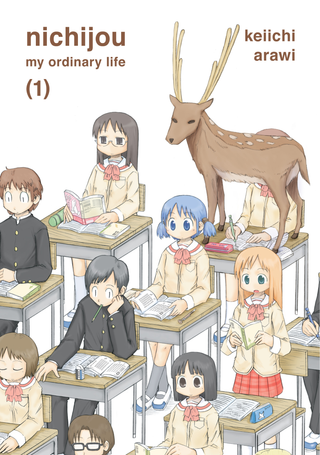
1. The Absurdity of Existence: The manga thrives on non-sequiturs. Whether it’s the school principal wrestling a deer in the courtyard or a character being struck by a sudden laser beam from the sky after an embarrassing moment, *Nichijou* suggests that the world is inherently chaotic and nonsensical.
2. The Desire for Belonging: Through Nano, the manga explores the theme of identity. Nano’s struggle to hide her robotic nature, despite it being obvious to everyone, serves as a poignant metaphor for the adolescent desire to fit in and the fear of being "different."
3. The Strength of Friendship: Despite the constant pranks and occasional physical comedy, the bond between Yuuko, Mio, and Mai is the emotional anchor of the series. Their friendship is built on shared silence, inside jokes, and the ability to tolerate each other’s eccentricities.
Artistic Style and Legacy
Keiichi Arawi’s art style is distinctive for its deceptive simplicity. He uses clean, minimalist lines that can suddenly explode into incredibly detailed, high-contrast panels during moments of intense emotion or action. This visual "whiplash" is a core component of the manga’s comedic timing.
In conclusion, *Nichijou* is a mandatory read for any otaku who appreciates the "art of the gag." It is a chaotic, heartwarming, and visually stunning exploration of what it means to live. It teaches us that while life may be frustrating and weird, there is a profound, hilarious beauty in the "ordinary" that we often take for granted. Whether you are a veteran collector or a
📖 Leer online en Donmanga:
➡️ Nichijou – Leer Manga