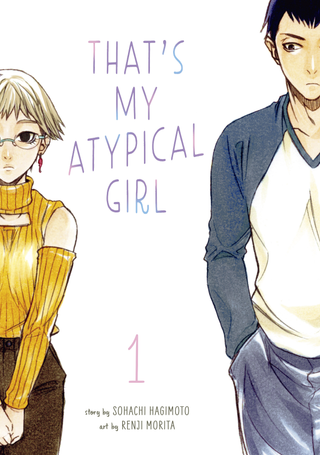
A Deep Dive into "That's My Atypical Girl" (Asper Kanojo): A Masterpiece of Neurodivergent Realism
In the vast landscape of contemporary manga, few works dare to peel back the layers of the human psyche with as much raw honesty and clinical precision as *That's My Atypical Girl* (originally titled *Asper Kanojo*). Written by Souhachi Hagimoto and illustrated with hauntingly expressive art by Renji Asai, this series stands as a monumental contribution to the Seinen demographic. It moves away from the escapist fantasies often found in the medium to deliver a poignant, sometimes uncomfortable, but ultimately essential look at life on the autism spectrum.
The Narrative Core: An Unexpected Encounter
The story follows Yokoi, a struggling delivery driver and aspiring doujin artist who lives a life of quiet isolation. Yokoi is a man who has largely withdrawn from society, finding solace in his creative work and his own internal world. His mundane existence is shattered when a young woman named Megumi Saitou appears at his doorstep. Megumi is a fan of his work who has traveled a great distance to meet him, driven by a profound sense of connection to the themes of alienation in his art.
However, this is no "manic pixie dream girl" trope. Megumi reveals that she has Asperger’s Syndrome (a term used within the manga’s context to describe her specific neurodivergent profile) and has suffered a lifetime of severe bullying, domestic abuse, and social rejection. Recognizing a kindred spirit in her vulnerability and shared trauma, Yokoi makes the impulsive, life-altering decision to let her stay with him. What follows is not a traditional romance, but a grueling, beautiful, and deeply realistic exploration of two marginalized individuals trying to build a "normal" life in a world that wasn't built for them.
Demographics and Tone: The Seinen Edge
*That's My Atypical Girl* is firmly rooted in the Seinen category. Unlike Shonen titles that might use mental health as a quirky character trait or a superpower, this manga treats its subject matter with adult gravity. It is published in Kodansha’s *Comic Days*, targeting an older audience capable of navigating complex emotional landscapes.
The tone is unflinching. It doesn't shy away from the "ugly" parts of neurodivergence—the sensory overloads, the violent meltdowns, the self-harm scars, and the paralyzing social anxiety. Yet, it balances this darkness with moments of profound domestic tenderness. The Seinen classification allows the author to explore the nuances of cohabitation, the financial strain of being a freelance creator, and the psychological toll of being a caregiver without the need for censorship or oversimplification.
Primary Themes: Beyond the Spectrum
The central theme is, undeniably, Neurodiversity. The manga serves as an educational tool, illustrating how sensory processing issues and social communication differences manifest in daily life. It challenges the reader to empathize with Megumi’s perspective, showing that her "atypical" behavior is often a logical response to an overwhelming environment.
Secondary to this is the theme of Trauma and Recovery. Both characters carry heavy baggage; Megumi’s past is a minefield of abuse, while Yokoi struggles with his own feelings of inadequacy and social detachment. The story posits that healing is not a linear path but a series of small, hard-won victories.
Furthermore, the manga explores the Ethics of Care. Yokoi is not a saint; he is a flawed human who often feels overwhelmed by the responsibility of supporting Megumi. The series asks difficult questions: How much can one person sacrifice for another? Can two "broken" people truly fix each other, or is it enough to simply exist side-by-side?
Artistic Execution and Resonance
Renji Asai’s art style is instrumental to the story’s impact. The character designs are grounded, and the facial expressions—particularly Megumi’s during her episodes of distress—are rendered with a visceral intensity that can be difficult to look at, yet impossible to turn away from. The use of negative space and claustrophobic paneling effectively conveys the characters' internal states of panic or isolation.
For any "otaku erudito" or serious manga reader, *That's My Atypical Girl* is a mandatory read. It transcends the boundaries of its genre to provide a voice to those who are often silenced or misunderstood. It is a story about the courage it takes to be "atypical" in a world that demands conformity, and the quiet beauty found in the struggle to survive.
📖 Leer online en Donmanga:
➡️ That's My Atypical Girl – Leer Manga