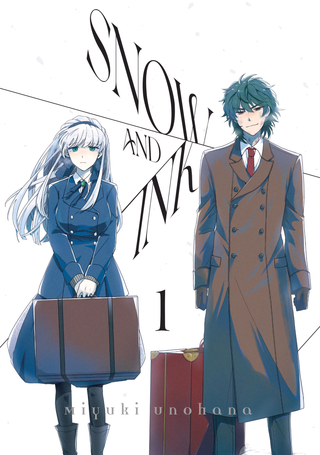
A Masterpiece of Brushstrokes and Shadows: An In-Depth Look at "Snow and Ink" (Yuki to Sumi)
In the vast landscape of historical Seinen manga, few works manage to capture the delicate balance between the harshness of reality and the ethereal beauty of art as effectively as "Snow and Ink" (*Yuki to Sumi*), written and illustrated by the talented Maru Maruyama. Serialized in the prestigious *Monthly Comic Beam*, this manga is a profound exploration of identity, social constraints, and the transformative power of creativity during the twilight of the Edo period.
The Plot: A Meeting of Two Worlds
Set against the evocative backdrop of the late Edo era, the story follows Yuki, a young woman living within the confines of the Yoshiwara—the famous pleasure district of old Tokyo. Yuki is not a high-ranking courtesan, but rather a worker navigating the rigid, often cruel hierarchy of the "Floating World." However, beneath her quiet exterior lies a burning, secret passion: she is a gifted artist. In a society where a woman’s value was often dictated by her beauty or her service, Yuki finds her true self through the tip of a brush, capturing the world around her in clandestine sketches.
Her life takes a pivotal turn when she encounters Sumi (Sumijiro), a wandering ronin with a disheveled appearance but a soul deeply attuned to the aesthetics of ink painting. Sumi is a man who has abandoned the traditional path of the samurai to pursue the "way of the brush." Their meeting is not merely a romantic trope but a collision of two souls seeking liberation. Sumi recognizes Yuki’s latent talent, and through their shared devotion to art, they begin an unconventional relationship that defies the strict social boundaries of their time.
Demographic and Narrative Style: The Seinen Edge
"Snow and Ink" is firmly rooted in the Seinen demographic. Unlike Shonen works that might focus on external battles or power progression, this manga delves into the internal psychological landscapes of its protagonists. It treats the historical setting with a mature, unflinching eye, depicting the Yoshiwara not as a romanticized playground, but as a place of systemic entrapment and fleeting joys.
Maru Maruyama’s narrative style is atmospheric and deliberate. The pacing mirrors the slow grind of an inkstone, building tension through subtle glances and the weight of unspoken words. The "Seinen" classification allows the author to explore the darker nuances of the Edo period, including the commodification of women and the existential crisis of the samurai class, without losing the poetic grace that defines the central relationship.
Core Themes: Art as Resistance
The title itself, *Snow and Ink*, serves as a powerful metaphor for the manga’s primary themes:
1. Art as Liberation: For both Yuki and Sumi, art is the only space where they are truly free. In a world that demands they play specific roles (the servant and the warrior), the act of painting becomes a form of silent rebellion.
2. The Ephemerality of Beauty (Ukiyo): The manga deeply engages with the concept of the "Floating World." It captures the transient nature of life in the Edo period—the "Snow" that melts away and the "Ink" that preserves a moment forever on paper.
3. Social Hierarchy and Gender: Yuki’s struggle is particularly poignant. As a woman in the Yoshiwara, her pursuit of art is a radical act. The manga examines how talent can be stifled by one's birthright and the courage required to reclaim one's agency.
4. The Master-Disciple Dynamic: The relationship between Yuki and Sumi evolves from curiosity to mutual mentorship. It challenges the traditional power dynamics of the era, focusing instead on the purity of artistic recognition.
Visual Artistry
One cannot discuss "Snow and Ink" without praising Maruyama’s art style. The linework is reminiscent of traditional Japanese woodblock prints (*Ukiyo-e*) and *Sumi-e* (ink wash painting). The use of negative space and heavy blacks creates a visual contrast that mirrors the title. The way the author depicts the movement of a brush on paper is almost tactile, making the reader feel the scratching of the nib and the flow of the ink.
Conclusion
"Snow and Ink" is a must-read for fans of historical dramas like *House of Five Leaves* or *Arte*. It is a sophisticated, emotionally resonant journey that honors the history of Japanese art while telling a deeply human story of two outcasts finding warmth in the cold "snow" of their reality. For any "otaku erudito" looking for a manga that offers intellectual depth alongside breathtaking visuals, this series is a hidden gem that deserves a prominent spot on your bookshelf. It is a testament to the fact that while seasons change and empires fall, the marks we leave with our "ink" remain.
📖 Leer online en Donmanga:
➡️ Snow and Ink – Leer Manga