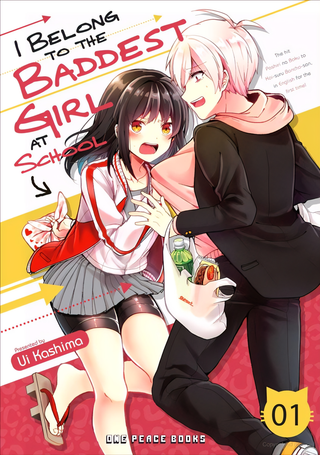
Greetings, fellow connoisseurs of the sequential arts. As an avid observer of the medium, it is always a pleasure to dissect a series that masterfully subverts the tropes of the high school romantic comedy. Today, we delve into the charming, often misunderstood world of "I Belong to the Baddest Girl at School" (originally titled *Pashiri na Boku to Koisuru Banchou-san*), a manga written and illustrated by the talented Rumi Kaifutsu.
Demographic and Genre Classification
To understand the DNA of this series, we must first look at its classification. Serialized in *Monthly Comic Alive*, this title falls firmly into the Shonen demographic. While it employs the lightheartedness typical of school-life comedies, it distinguishes itself through a clever "gap moe" aesthetic and a central narrative hook built entirely on a colossal, yet endearing, communication breakdown. It is a quintessential romantic comedy that leans heavily into the "delinquent" (yankee) subgenre, albeit with a much softer heart than its predecessors.
The Premise: A Tale of Two Misunderstandings
The story centers on Unoki, a high school student who has spent his entire life being the "pashiri"—a Japanese term for an errand boy or a lackey for bullies. Due to his timid nature and frail appearance, Unoki has become a professional at servitude, living in constant fear of the school’s "predators."
His life takes a drastic turn when he is approached by Toramaru, the school’s "Banchou" (delinquent leader). Toramaru is legendary for her fighting prowess and her intimidating aura, which commands respect and fear from everyone in the district. When she corners Unoki and tells him, *"Be mine,"* she is actually confessing her long-standing, secret crush on him. However, Unoki, traumatized by years of bullying, interprets her words in the most literal, terrifying way possible: he believes he has been drafted as her personal, permanent errand boy for life.
Plot Dynamics and Character Growth
The narrative engine of *I Belong to the Baddest Girl at School* is this central irony. Toramaru believes they are in a committed, romantic relationship. She tries to do "girlfriend" things—like making him lunch or walking home together—which Unoki interprets as "tests of loyalty" or "servant duties."
As the story progresses, we see the "Baddest Girl" is anything but. Toramaru is a "pure-hearted delinquent"—she is incredibly shy, socially awkward when it comes to romance, and genuinely adores Unoki. The humor arises from the juxtaposition of her "tough" exterior and her internal monologue of a girl in love. Conversely, Unoki slowly begins to realize that his "master" isn't as cruel as he thought. While he remains oblivious to her romantic feelings for a significant portion of the story, his character arc involves finding his own backbone and learning to stand by Toramaru’s side, not just behind her.
The supporting cast, including Toramaru’s loyal (and equally confused) subordinates and Unoki’s few friends, adds layers to the comedy. They often act as the audience’s proxy, watching the absurdity of the main couple's interactions with a mix of bewilderment and support.
Key Themes
1. The "Gap Moe" Phenomenon: The series thrives on the contrast between appearance and reality. Toramaru looks like a threat but acts like a maiden; Unoki looks like a victim but possesses a strange kind of resilience.
2. Communication Breakdown: It serves as a satirical take on the "will-they-won't-they" trope, showing how preconceived notions can completely blind us to the truth of a situation.
3. Subverting Delinquent Tropes: Unlike traditional delinquent manga that focus on territorial battles, this series uses the "Banchou" setting to explore vulnerability and the desire for normalcy.
4. Personal Courage: Beyond the romance, it is a story about Unoki overcoming his "victim" mindset and Toramaru learning to express her true self without the shield of her reputation.
Conclusion
*I Belong to the Baddest Girl at School* is a refreshing, wholesome, and genuinely funny take on the high school romance genre. It avoids the toxicity often found in "bully/victim" dynamics by making the power imbalance a source of comedy rather than malice. For readers looking for a "feel-good" Shonen manga with a unique twist on the delinquent trope, this is an essential addition to your digital or physical shelf. It reminds us that sometimes, the person we fear the most might just be the one who loves us the best.
📖 Leer online en Donmanga:
➡️ I Belong to the Baddest Girl at School – Leer Manga