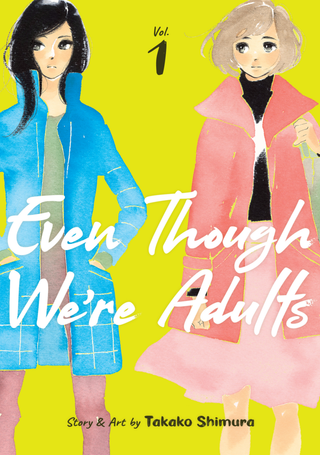
For any seasoned manga enthusiast, the name Takako Shimura carries immense weight. Known for her delicate art style and her fearless exploration of gender and identity in masterpieces like *Wandering Son* and *Aoi Hana (Sweet Blue Flowers)*, Shimura returns to the spotlight with a poignant, grounded, and deeply human narrative: "Even Though We’re Adults" (*Otona ni Nattemo*).
The Premise: A Chance Encounter and a Life Upended
The story follows Ayano Kakutani, a primary school teacher in her thirties who leads what many would consider a "perfect" life. She is kind, professional, and happily married to her husband, Wataru. However, her world shifts on its axis one evening when she enters a local bar and meets Akari, a charismatic and openly lesbian bartender.
What begins as a pleasant conversation quickly escalates into an unexpected spark of chemistry. Despite her marriage and her history of identifying as heterosexual, Ayano finds herself drawn to Akari in a way she cannot explain. This leads to a one-night stand that serves as the catalyst for the entire series. Unlike many romance manga that focus on the "chase," *Even Though We’re Adults* focuses on the fallout. Ayano is forced to confront a terrifying realization: she might be attracted to women, and the life she has meticulously built—her marriage, her social standing, and her self-image—is based on a foundation she no longer recognizes.
Demographics and Genre: A Mature Perspective
While many Western readers might categorize any female-centric romance as *Shojo*, *Even Though We’re Adults* is firmly rooted in the Josei demographic (aimed at adult women), though it is often appreciated by Seinen fans for its psychological depth and realism.
Unlike *Yuri* (Girls' Love) titles that lean into "moe" tropes or idealized schoolgirl romances, this is a "Mature Yuri" drama. It strips away the fantasy of effortless love and replaces it with the messy, complicated realities of being an adult in modern Japan. There are no magical solutions here; there are only difficult conversations, legal complications of divorce, and the social stigma of coming out later in life.
Core Themes: The Complexity of "Adulthood"
The title itself is a masterclass in irony. The central theme of the manga is the fallacy that reaching adulthood means having everything figured out.
1. Late-Blooming Identity: Ayano’s journey is one of the most realistic depictions of "compulsory heteronormativity" in manga. She didn't necessarily "hide" her sexuality; she simply never questioned the path laid out for her until she met someone who made her feel alive.
2. The Ethics of Infidelity: Shimura does not romanticize Ayano’s actions. The manga explores the pain caused to Wataru, her husband, and the moral gray areas of seeking personal truth at the cost of breaking a vow. It asks the reader: Is it better to live a lie to keep others happy, or to cause pain in pursuit of authenticity?
3. Societal Expectations vs. Personal Desire: Set against the backdrop of Japanese society, the characters struggle with the "proper" way to behave. Akari, who is already out, faces her own set of challenges, including the weariness of being the "other" and the difficulty of finding a stable partner who is ready to face the world with her.
Why You Should Read It
Visually, Takako Shimura’s art is as breathtaking as ever. Her thin, clean lines and expressive character designs convey a wealth of emotion through subtle glances and body language. The pacing is deliberate, allowing the emotional weight of each chapter to settle.
*Even Though We’re Adults* is a must-read for those who crave a sophisticated narrative. It is a story about the courage it takes to change your life when you’re "already supposed to be settled." It’s a reminder that growth doesn't stop at twenty or thirty—that we are all works in progress, constantly discovering who we are, even though we’re adults.
For fans of realistic character studies and nuanced LGBTQ+ storytelling, this manga stands as a pinnacle of the genre, proving once again why Shimura is a legendary voice in the medium.
📖 Leer online en Donmanga:
➡️ Even Though We're Adults – Leer Manga