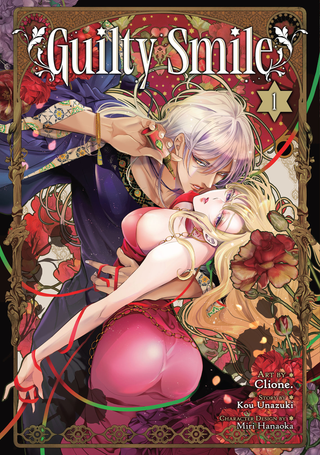
For those who delve deep into the psychological corners of the Seinen genre, few titles manage to capture the unsettling intersection of domestic life and social performance as poignantly as "Guilty Smile" (ギルティ・スマイル). Written and illustrated by the talented Katsura Zekkyou—an artist known for a distinct ability to blend aesthetic beauty with underlying narrative rot—this manga is a masterclass in the "mask" we wear for society.
The Plot: A Facade of Perfection
At the center of *Guilty Smile* is Chika, a high school girl who embodies the Japanese ideal of the "perfect student." She is beautiful, diligent, kind-hearted, and admired by her peers. To the outside world, Chika is a beacon of light, the kind of person who seems to have her life entirely under control. However, as the title suggests, her radiant smile is a carefully constructed lie—a "guilty" shield protecting a much darker reality.
The narrative shifts focus when we enter the confines of Chika’s home. Here, the polished veneer of the star student vanishes, replaced by a claustrophobic and twisted domestic dynamic. Chika lives with her brother, Keisuke, who is portrayed as a social outcast or a "hikikomori" figure. The story meticulously deconstructs their relationship, revealing a bond that is far from the wholesome sibling connection one might expect.
Instead of a supportive family environment, the reader is introduced to a world of obsession, codependency, and psychological manipulation. Chika’s "guilt" stems from the secret life she leads behind closed doors, where the power dynamics are blurred and the moral boundaries are constantly tested. The manga follows Chika as she struggles to maintain her public persona while her private life threatens to collapse under the weight of her own choices and the suffocating atmosphere of her home.
Demographics and Genre: A Seinen Psychological Drama
*Guilty Smile* is firmly rooted in the Seinen demographic. Unlike Shonen titles that might focus on external growth or physical battles, this manga targets an adult male audience (though its themes resonate across genders) by focusing on internal conflict, social commentary, and the complexities of human morality.
It belongs to the Psychological Drama and Slice of Life (Dark) subgenres. It eschews supernatural elements or high-octane action in favor of "quiet" horror—the kind of horror that exists in a look, a silence, or a forced smile. Katsura Zekkyou’s art style plays a crucial role here; the characters are drawn with a delicate, almost fragile beauty that makes the darker thematic turns feel even more jarring and effective.
Main Themes: The Duality of Self
The core of *Guilty Smile* lies in its exploration of several heavy themes:
1. Honne vs. Tatemae: A quintessential Japanese concept, the manga explores the gap between one's true feelings (*honne*) and the behavior one displays in public (*tatemae*). Chika is the ultimate personification of this struggle, showing how the pressure to remain "perfect" can lead to psychological fragmentation.
2. The Burden of Expectation: The story examines how societal and familial expectations can drive an individual to extremes. Chika’s "guilty smile" is a survival mechanism against a world that refuses to see her as anything other than a role model.
3. Toxic Codependency: The relationship between the siblings serves as a grim study of how love can morph into something destructive. The manga asks where the line is between "caring for family" and "consuming" them.
4. Moral Ambiguity: There are no clear heroes or villains in *Guilty Smile*. Every character is flawed, and their motivations are often rooted in
📖 Leer online en Donmanga:
➡️ Guilty Smile – Leer Manga