### Breaking Stereotypes with Style: A Deep Dive into "Please Tell Me! Galko-chan"
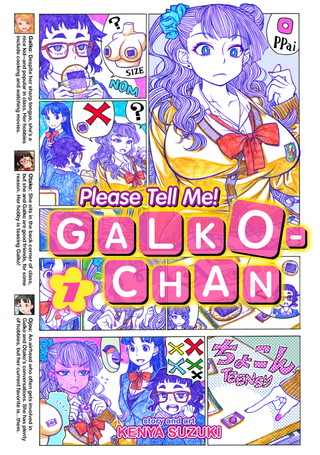
In the vast landscape of modern manga, few titles manage to balance raunchy humor, genuine curiosity, and heartwarming character dynamics as effectively as "Please Tell Me! Galko-chan" (*Oshiete! Galko-chan*). Created by Kenya Suzuki, this series originally began its life as a popular web manga on Twitter and Pixiv before being serialized in Kadokawa's *ComicWalker*. With its vibrant art style and unapologetic exploration of the teenage experience, it has carved out a unique niche in the "Slice of Life" genre.
# The Plot: Urban Legends and High School Realities
The premise of *Please Tell Me! Galko-chan* is deceptively simple yet brilliantly executed. Each chapter typically begins with a question or an "urban legend" regarding the human body, social behaviors, or gender-specific myths—often of a slightly "mature" or "ecchi" nature. From there, the story follows three high school girls as they discuss these topics, debunking myths and sharing personal anecdotes that reveal their true characters.
The narrative doesn't follow a high-stakes plot; instead, it thrives on the "micro-moments" of daily life. Whether they are sitting in the back of the classroom, hanging out at a café, or visiting the school nurse, the trio navigates the awkwardness of puberty and the complexities of social labels. The manga excels at taking "taboo" subjects—such as menstruation, body hair, or physical development—and discussing them with a refreshing mix of bluntness and innocence.
# The Iconic Trio: Subverting the Archetypes
The heart of the manga lies in its three protagonists, whose names are literal puns on their character archetypes:
1. Galko: Despite her "gyaru" (gal) appearance—complete with dyed blonde hair, trendy accessories, and a provocative fashion sense—Galko is the most wholesome character in the series. She is kind-hearted, easily embarrassed, and surprisingly domestic. She subverts the "promiscuous gal" trope entirely, often being the most naive regarding the very rumors people spread about her.
2. Otako: A plain-looking girl who sits in the back of the class, Otako is the "otaku" of the group. She is cynical, sharp-tongued, and loves to tease Galko. Despite her quiet demeanor, she is often the one who brings up the most provocative questions just to see Galko’s flustered reactions.
3. Ojou: Representing the "refined lady" or "ojousama" trope, Ojou is wealthy, polite, and somewhat airheaded. She provides a sense of innocent wonder to the group, often taking the wildest rumors at face value, which leads to hilarious misunderstandings.
# Demographics and Tone: A Seinen Gem
While the school setting might suggest a Shonen demographic, *Please Tell Me! Galko-chan* is firmly classified as Seinen. It targets a young adult male audience, but its honest portrayal of female friendship has earned it a significant following across all genders.
The Seinen classification allows Kenya Suzuki to explore themes with a level of frankness that Shonen might shy away from. However, it’s important to note that the series is not "hentai" or purely fanservice-driven. Instead, it uses its "ecchi" elements as a gateway to discuss the biological and social realities of growing up. It’s a "Seinen" manga that feels more like a supportive guide to adolescence than a typical gag comedy.
# Main Themes: Beyond the Surface
The central theme of the manga is "Don't judge a book by its cover." Galko is the living embodiment of this message. The series constantly juxtaposes how the world perceives these girls versus who they actually are. It critiques the way society labels young women based on their appearance or hobbies.
Another major theme is Female Solidarity. Despite their vastly different social standings and interests, Galko, Otako, and Ojou share an unbreakable bond. They support each other through the insecurities of high school life, proving that friendship transcends "cliques."
Lastly, the manga celebrates Body Positivity and Curiosity. By addressing "embarrassing" questions about the human body, it normalizes the anxieties that many teenagers feel but are too afraid to ask about. It turns the "mysterious" into the "mundane," stripping away the shame often associated with physical growth.
# Conclusion
*Please Tell Me! Galko-chan* is a vibrant, colorful, and surprisingly educational journey through the halls of high school. With Kenya Suzuki’s unique, watercolor-esque art style and a cast of characters that feel like real friends, it is a must-read for anyone looking for a Slice of Life series that isn't afraid to get a little messy. It reminds us that behind every stereotype is a human being just trying to figure themselves out.
📖 Leer online en Donmanga:
➡️ Please Tell Me! Galko-chan – Leer Manga