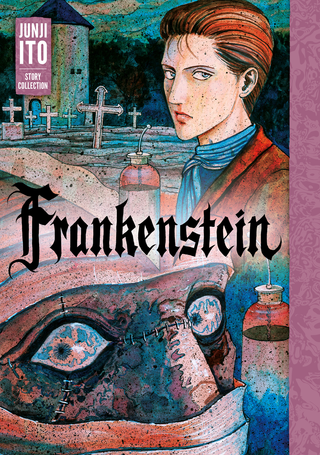
As a seasoned observer of the macabre and the sublime in the world of sequential art, it is a privilege to dissect one of the most significant works in modern horror manga: "Frankenstein: Junji Ito Story Collection." This volume is not merely another adaptation of Mary Shelley’s 1818 masterpiece; it is a visceral, Eisner Award-winning reimagining that bridges the gap between 19th-century Gothic Romanticism and the disturbing "body horror" aesthetic that has made Junji Ito a household name among global otaku.
Demographic and Context
To understand this collection, one must first place it within the landscape of Japanese publishing. While Junji Ito’s work is often categorized as Seinen (young adult men) in Western markets due to its graphic intensity and philosophical depth, the stories in this collection were originally serialized in magazines like *Monthly Halloween*, which technically falls under the Josei (young adult women) horror umbrella. This demographic origin is crucial; it explains the emphasis on emotional isolation, the elegance of the character designs, and the lingering, atmospheric dread that permeates the narrative.
Plot Synopsis: A Faithful Yet Twisted Vision
The centerpiece of the collection is the titular "Frankenstein." Unlike many cinematic versions that turn the creature into a mindless brute, Ito returns to the source material, presenting a creature that is articulate, deeply wounded, and profoundly existential.
The story follows Victor Frankenstein, a brilliant but hubristic scientist obsessed with the secrets of life and death. Through a series of gruesome experiments involving the stitching together of disparate cadavers, he breathes life into a giant. However, upon seeing the "abhorrent" result of his labor, Victor flees in terror, abandoning his creation to a world that will never accept it.
What follows is a tragic game of cat-and-mouse that spans across Europe. The creature, initially innocent and seeking only companionship, is hardened by the cruelty of humanity. Ito masterfully depicts the creature’s descent into vengeance as it systematically destroys everything Victor holds dear, demanding that the scientist create a mate for him or suffer the consequences. The narrative culminates in a chilling pursuit through the frozen wastes of the Arctic, where creator and creation become inextricably linked in a dance of mutual destruction.
Beyond the main adaptation, the "Story Collection" includes several of Ito’s celebrated short stories, most notably the "Oshikiri" cycle. These stories follow a diminutive high school boy living alone in a decaying mansion that serves as a gateway to parallel dimensions. These tales explore themes of hallucinations, doppelgängers, and the blurring of reality, providing a perfect tonal counterpoint to the Gothic tragedy of Frankenstein.
Main Themes and Philosophical Underpinnings
The core theme of this collection is the monstrosity of the ego. Victor Frankenstein is not a hero; he is a cautionary tale of scientific ambition devoid of moral responsibility. Ito uses his signature hyper-detailed art style to emphasize the "uncanny valley"—the creature is horrifying precisely because it looks *almost* human, reflecting the fractured soul of its creator.
Another prominent theme is isolation. Whether it is the creature’s social exile or Oshikiri’s literal isolation in his sprawling home, Ito explores how loneliness can warp the psyche and lead to horrific manifestations. The collection also delves into body horror, a staple of Ito’s work. He visualizes the "spark of life" not as a clean bolt of lightning, but as a messy, biological, and traumatic event.
Why It Is a Masterpiece
For the erudite reader, the appeal of this collection lies in Ito’s linework. His ability to render textures—the coldness of the ice, the wetness of exposed muscle, and the hollow despair in a character’s eyes—is unparalleled. He captures the "sublime" in the classical sense: a beauty so vast and terrifying that it overwhelms the viewer.
In conclusion, *Frankenstein: Junji Ito Story Collection* is an essential read for anyone looking to understand the evolution of horror manga. It respects the literary roots of its source material while injecting it with a modern, surrealist nightmare fuel that only Junji Ito can provide. It is a haunting exploration of what it means to be human and the terrifying price of playing God.
📖 Leer online en Donmanga:
➡️ Frankenstein – Junji Ito Story Collection – Leer Manga