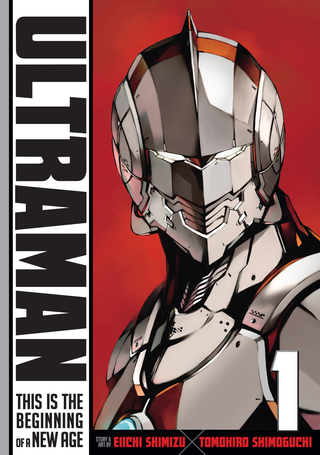
As a seasoned scholar of the medium, it is my absolute pleasure to delve into one of the most significant "reimaginings" in modern manga history. When we talk about Ultraman, the 2011 manga written by Eiichi Shimizu and illustrated by Tomohiro Shimoguchi, we aren't just talking about a simple reboot. We are discussing a sophisticated, Seinen-leaning sequel to the legendary 1966 tokusatsu series that redefined the "Giant Hero" trope for a contemporary audience.
The Plot: A Legacy Reborn
The story takes place several decades after the events of the original 1966 television series. In this timeline, the "Giant of Light" is now a memory, a mythic figure who saved Earth from kaiju and then departed, leaving his human host, Shin Hayata, with no recollection of his time as a hero. Earth has enjoyed a long period of perceived peace, and the Science Special Search Party (SSSP) has transitioned into a secret organization, acting more like a shadow government agency than a public defense force.
The narrative follows Shinjiro Hayata, Shin’s teenage son. From a young age, Shinjiro has realized he is "different." He possesses superhuman strength, incredible agility, and skin as hard as steel. This is the "Ultraman Factor," a genetic remnant passed down from his father. When a mysterious and powerful entity known as Bemular attacks, Shinjiro is thrust into a world of intergalactic conspiracy. He discovers his father’s secret past and is recruited by the SSSP to don a high-tech, metallic "Ultraman Suit." Unlike the original giant of light, Shinjiro remains human-sized, fighting in a sleek, mechanical armor that bridges the gap between the classic aesthetic and modern "Iron Man-esque" sci-fi.
Demographic and Genre: The Shift to Seinen
While the original franchise is often associated with the *Kyodai Hero* (Giant Hero) subgenre of Shonen or children’s media, this manga is firmly rooted in the Seinen demographic. Originally serialized in *Monthly Hero's*, it targets an older audience that grew up with the franchise but now craves complexity.
The shift to Seinen allows Shimizu and Shimoguchi to explore the "gray areas" of justice. The action is visceral and high-stakes, but the narrative weight lies in the political intrigue. The world is no longer a simple "Human vs. Monster" battlefield; it is a complex ecosystem where thousands of aliens live in secret among humans, some as refugees, others as criminals, and many as influential puppet masters.
Core Themes: The Burden of the Suit
The manga explores several profound themes that elevate it above a standard action series:
1. The Weight of Legacy: Shinjiro struggles with the shadow of his father. He isn't a god-like being from Nebula M78; he is a boy in a suit trying to live up to an impossible ideal. The story asks: *Does the power make the hero, or does the hero define the power?*
2. Moral Ambiguity and Coexistence: One of the most compelling aspects is the "Alien City," a hidden ghetto where extraterrestrials reside. The manga tackles themes of xenophobia and social integration. Shinjiro often finds himself questioning if the "monsters" he is sent to eliminate are truly villains or simply victims of a system that doesn't want them to exist.
3. The Evolution of Justice: Through the introduction of other "Ultramen"—such as the cold, pragmatic Dan Moroboshi (Seven) and the hot-headed Jack—the series presents conflicting philosophies on what it means to protect the peace. Is justice about saving every individual, or is it about making the "necessary" sacrifices to ensure the survival of the species?
Why It Matters for SEO and Readers
For fans of the Netflix anime adaptation, the manga is the definitive source material, offering much deeper world-building and more intricate character development. The art by Shimoguchi is a masterclass in mechanical design, blending organic curves with industrial grit.
In conclusion, the *Ultraman* manga is a brilliant deconstruction of a cultural icon. It strips away the "magic" of the 1960s and replaces it with a grounded, technological, and philosophically rich narrative. Whether you are a die-hard Tokusatsu fan or a newcomer looking for a high-octane sci-fi thriller, this series is an essential addition to your library. It proves that even after 50 years, the spirit of Ultraman is not just about growing giant—it’s about the giant heart required to do what is right.
📖 Leer online en Donmanga:
➡️ Ultraman – Leer Manga