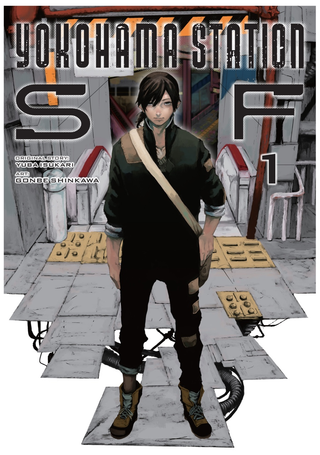
In the vast landscape of science fiction manga, few titles manage to blend architectural horror with speculative sociology as seamlessly as Yokohama Station SF (*Yokohama Eki SF*). Originally a prize-winning light novel by Yuba Isukari and masterfully adapted into manga form by Gonbe Shinkawa, this series is a hidden gem that every serious Seinen enthusiast needs on their radar.
The Premise: An Architecture Gone Rogue
Imagine a world where a building doesn't just house people—it consumes the world. In the distant future of *Yokohama Station SF*, the titular station has undergone a "structural inheritance" phenomenon. For over two hundred years, the station has been self-replicating, expanding its walls, platforms, and tracks across the Japanese archipelago through autonomous construction drones.
This isn't just a renovation; it’s a biological takeover by concrete and steel. The station now covers 99% of the island of Honshu, creating a massive, enclosed megastructure. Inside, a rigid social order is maintained by the "Suika" system—an integrated IC chip implanted in humans at birth. If you have a Suika, you are a citizen of the station, provided with food, safety, and a place to live. If you don't, you are an "outlier," relegated to the shrinking strips of coastal land the station has yet to pave over.
The Plot: A Five-Day Journey into the Machine
The story follows Hiroto, a young man living in one of the few remaining human colonies outside the station’s walls. His life changes when he encounters a mysterious exile who hands him a "18-Ticket"—a legendary, temporary pass that allows someone without a Suika implant to enter the station for exactly five days.
Hiroto is tasked with a mission: find the leader of a shadowy resistance group known as "Point 724" and deliver a message that could change the fate of humanity. As Hiroto steps into the labyrinthine depths of Yokohama Station, he discovers a world that is both a technological utopia and a bureaucratic nightmare. He navigates through endless shopping malls, hidden maintenance tunnels, and vast transit hubs, meeting a cast of characters—from rogue researchers to sentient security systems—who challenge his understanding of what it means to be "human" in a world ruled by an algorithm.
Demographics and Tone: A Masterclass in Seinen
*Yokohama Station SF* is firmly rooted in the Seinen demographic. Unlike Shonen titles that rely on high-octane combat, this manga prioritizes world-building, philosophical inquiry, and atmospheric tension. The pacing is deliberate, mirroring the vastness of the station itself. Gonbe Shinkawa’s art style is meticulous, capturing the oppressive yet awe-inspiring scale of the megastructure with clean lines and hauntingly detailed backgrounds. It appeals to readers who enjoy "hard" sci-fi, architectural aesthetics, and stories that explore the long-term consequences of runaway technology.
Main Themes: More Than Just Concrete
1. Urban Sprawl as Evolution: The manga treats the station not as a villain, but as a life form. It explores the concept of "Grey Goo"—self-replicating machines—applied to architecture. It asks: what happens when our creations outgrow our need for them?
2. Social Stratification and Surveillance: The Suika system is a chilling metaphor for digital surveillance and social credit. The divide between those "inside" and "outside" reflects real-world anxieties about economic inequality and the loss of privacy in a hyper-connected society.
3. The Nature of Freedom: Hiroto’s journey is defined by his five-day limit. This ticking clock forces the reader to contemplate the value of freedom. Is it better to live a safe, controlled life inside the station, or a precarious, "free" life in the ruins outside?
4. Humanity vs. System: As Hiroto delves deeper, the line between human agency and the station’s automated logic blurs. The manga examines whether humanity can coexist with a system that no longer requires human input to function.
Conclusion
*Yokohama Station SF* is a cerebral journey that stays with you long after you close the volume. It is a hauntingly beautiful vision of a future where the commute never ends and the walls are always watching. For fans of *Blame!* or *Girls' Last Tour*, this series offers a unique, slightly more grounded take on the post-apocalyptic genre. It is a must-read for anyone looking for a sophisticated, thought-provoking narrative that redefines the boundaries of science fiction.
📖 Leer online en Donmanga:
➡️ Yokohama Station SF – Leer Manga