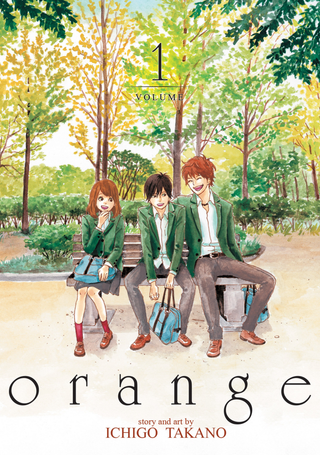
As an erudite otaku who has spent decades analyzing the nuances of sequential art, I find that few titles bridge the gap between heart-wrenching drama and speculative fiction as gracefully as "Orange" by Ichigo Takano. First serialized in 2012, this manga is a profound exploration of the "what ifs" that haunt the human psyche, wrapped in the aesthetic of a slice-of-life school drama.
The Premise: A Letter from the Future
The story begins with Naho Takamiya, a shy, second-year high school student in Matsumoto. Her life is irrevocably changed when she receives a letter claiming to be from herself, ten years in the future. Initially skeptical, Naho is forced to believe the letter’s authenticity when it accurately predicts the arrival of a new transfer student from Tokyo named Kakeru Naruse.
The future Naho writes with a singular, desperate purpose: to erase her greatest regrets. The letters detail specific events—small choices like whether to invite Kakeru to walk home or larger ones like participating in a relay race—that ultimately lead to a tragedy. The future Naho reveals that Kakeru is no longer with them in her timeline, and she tasks her younger self with changing the course of history to save his life.
Demographics: A Rare Crossover Appeal
From a technical standpoint, *Orange* occupies a fascinating space in the manga industry. It originally began its serialization in Shueisha’s *Bessatsu Margaret*, a quintessential Shojo magazine. However, it later moved to Futabasha’s *Monthly Action*, a Seinen magazine.
This shift is palpable in the narrative’s maturity. While it retains the soft, expressive art style and romantic tension typical of Shojo, its thematic depth and psychological realism align it with Seinen. It transcends the "high school romance" trope by focusing on the heavy burden of grief and the complexities of adult regret, making it a compelling read for both young women and older male audiences.
Core Themes: Regret, Mental Health, and Parallel Worlds
The brilliance of *Orange* lies in its thematic density. At its heart, it is a study of regret. It asks whether we can truly forgive ourselves for the things we didn't say or the actions we didn't take. Naho’s struggle is not just against fate, but against her own timid nature; she must find the courage to act differently than her instincts dictate to create a new future.
Furthermore, the manga handles mental health and depression with remarkable sensitivity. Kakeru’s internal struggle is portrayed not as a puzzle to be solved, but as a heavy, suffocating weight. The narrative emphasizes that "saving" someone isn't a one-time heroic act, but a series of small, consistent gestures of kindness and presence.
The science-fiction element—the time-travel via letters—is grounded in the theory of parallel universes. The manga acknowledges that even if the past Naho saves Kakeru, the future Naho who wrote the letters will still live in a world where he is gone. This adds a layer of bittersweet altruism to the plot; the characters are fighting for a version of happiness they themselves may never witness.
The Power of the Group
While Naho is the protagonist, *Orange* is an ensemble piece. The bond between the six core friends—Naho, Kakeru, Suwa, Azusa, Hagita, and Chino—is the story's backbone. Hiroto Suwa, in particular, stands out as one of the most selfless characters in manga history. His role challenges the typical "love triangle" dynamics, prioritizing the well-being and life of his friend over his own romantic desires.
Conclusion
*Orange* is a masterclass in emotional storytelling. It is a poignant reminder that while we cannot change the past, we have the power to shape the future through empathy and courage. For any reader looking for a story that combines the tenderness of a first love with the weight of existential reflection, Ichigo Takano’s masterpiece is an essential addition to your collection. It is a story that lingers long after the final page is turned, much like the bittersweet scent of its namesake fruit.
📖 Leer online en Donmanga:
➡️ orange – Leer Manga