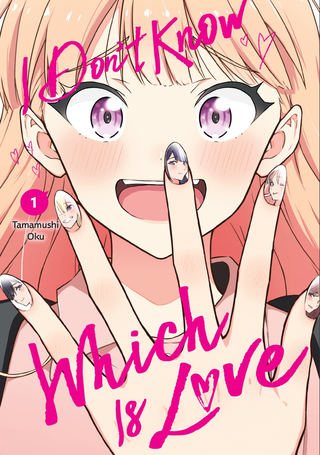
In the vast and ever-evolving landscape of Girls’ Love (Yuri) manga, few titles manage to balance comedic tropes with genuine introspective growth as effectively as "I Don't Know Which Is Love" (Japanese title: *Dore ga Koi ka Wakaranai*). Written and illustrated by the talented Tamamushi Itsumi, this series has garnered significant attention for its refreshing take on the "harem" subgenre, applying it to a demographic that traditionally favors singular, focused romances.
The Premise: A Quest for the Meaning of "Like"
The story follows Sora Mei, an energetic and somewhat relatable high school girl who begins the narrative with a singular goal: she wants a boyfriend. Like many teenagers, she feels the societal pressure to experience a "sparkling" high school romance. However, after a series of failed attempts and a lack of genuine connection with the opposite sex, Mei has a sudden, life-altering epiphany. While watching a romantic moment between two women, she realizes that her heart doesn't flutter for boys—it beats for girls.
Determined to make up for lost time, Mei decides to dive headfirst into the world of same-sex romance. The problem? She has no idea what "love" actually feels like. Is it the racing heart she feels around a beautiful upperclassman? Is it the comfort she finds in a childhood friend? To solve this dilemma, Mei finds herself entangled with five different women, each representing a different facet of affection, leading her to wonder: *Which one of these feelings is actually love?*
Demographics and Magazine Context
"I Don't Know Which Is Love" is serialized in Comic Yuri Hime, the premier magazine for Yuri enthusiasts. While Yuri is its own distinct category, the series leans heavily into the Seinen and Josei crossover appeal. It avoids the overly melodramatic "Class S" tropes of older Yuri works, instead opting for a modern, character-driven narrative that appeals to young adults. Its structure mirrors the "harem" or "multi-route" style often found in Shonen rom-coms, but it subverts these expectations by focusing deeply on Mei’s internal monologue and her psychological journey toward self-acceptance.
The Five Contenders
The brilliance of the manga lies in its diverse cast, each challenging Mei’s perceptions:
1. Karin: The childhood friend. She represents comfort and shared history, raising the question of whether long-term platonic bonds can—or should—evolve into romance.
2. Fuuka-senpai: The elegant, popular student. She embodies admiration and the "crush" culture, forcing Mei to distinguish between idolization and genuine intimacy.
3. Sensei: The taboo element. Her presence introduces the complexities of maturity and the boundaries of professional versus personal attraction.
4. Yuu: The energetic underclassman (kouhai). She brings a sense of urgency and youthful passion to the mix.
5. Maria: The "cool" and mysterious girl who challenges Mei’s competitive nature.
Key Themes: Identity and the Spectrum of Affection
The central theme of the manga is the deconstruction of romantic attraction. Unlike many stories where the protagonist falls in love at first sight, Mei is an "unreliable feeler." She is hyper-aware of her physical reactions but struggles to translate them into emotional truths. This makes the manga a fascinating study of sexual identity and the confusion that often accompanies coming out to oneself.
Another major theme is agency. Mei isn't a passive protagonist waiting to be swept off her feet; she is the "Love Hunter." Her proactive (and often clumsy) approach to dating provides a comedic goldmine while highlighting a very real desire for self-discovery. The manga asks a profound question: *Is love something you find, or is it something you decide upon?*
Visual Style and Tone
Tamamushi Itsumi’s art style is clean, expressive, and vibrant. The character designs are distinct, ensuring that each of the five love interests feels like a fully realized individual rather than a mere archetype. The tone strikes a perfect chord between lighthearted comedy and poignant reflection, making it an accessible entry point for newcomers to the Yuri genre while providing enough depth to satisfy veteran readers.
Conclusion
"I Don't Know Which Is Love" is more than just a harem comedy; it is a vibrant, chaotic, and heartfelt exploration of a young woman trying to navigate the map of her own heart. For fans of series like *The 100 Girlfriends Who Really, Really, Really, Really, Really Love You* but with a queer, grounded twist, this manga is an essential read. It captures the beautiful, messy uncertainty of youth and the universal quest to understand the most complex emotion of all.
📖 Leer online en Donmanga:
➡️ I Don't Know Which Is Love – Leer Manga