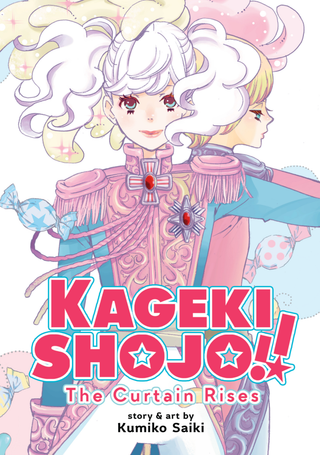
Spotlight on the Stage: A Deep Dive into 'Kageki Shojo!! The Curtain Rises'
In the vast landscape of manga, few series manage to capture the grueling intersection of adolescent ambition and the performing arts as poignantly as Kumiko Saiki’s *Kageki Shojo!! The Curtain Rises*. Originally serialized as *Kageki Shojo!* before its move to a new magazine, this "Season Zero" or prequel volume sets the stage for one of the most compelling character dramas in recent years. As an erudite observer of the medium, it is clear that Saiki has crafted more than just a "school life" story; she has created a visceral exploration of the masks we wear both on and off the stage.
The Plot: A Tale of Two Stars
The story is set within the hallowed, ivy-covered walls of the Kouka School of Musical and Theatrical Arts. This prestigious academy is modeled after the real-world Takarazuka Revue, an all-female theater troupe where women play both male (*otoko-yaku*) and female (*musume-yaku*) roles. Admission is nearly impossible, and the discipline is legendary.
The narrative follows two polar opposites who are thrust together as roommates in the 100th class of Kouka. First, we have Sarasa Watanabe, a 178cm tall, boisterous, and seemingly naive girl from rural Shizuoka. Sarasa harbors a singular, burning obsession: she wants to play the role of Oscar François de Jarjayes from *The Rose of Versailles*. Despite her lack of formal training, her raw charisma and "stage presence" are undeniable.
Contrasting Sarasa is Ai Narata, a former national idol from the group JPX48. Ai is cynical, misanthropic, and deeply traumatized by her experiences in the idol industry. She hates men and joined Kouka specifically because it is an all-female environment where she hopes to hide from the world. While Sarasa is all light and projection, Ai is a closed book, possessing technical perfection but lacking the "soul" required for the stage. The manga chronicles their first year as they navigate the cutthroat hierarchy of the school, forming an unlikely bond that challenges their perceptions of talent and identity.
Demographics and Genre Fluidity
One of the most fascinating aspects of *Kageki Shojo!! The Curtain Rises* is its demographic history. It was originally serialized in *Jump Kai*, a Seinen magazine aimed at young adult men. However, when the magazine folded, the series moved to *Melody*, a Josei magazine. This transition is palpable in the writing. It possesses the psychological grit and unflinching realism often found in Seinen, yet it maintains the emotional intricacy and aesthetic sensibilities of Josei. It is a rare "crossover" hit that appeals to anyone who appreciates deep character studies, regardless of the target demographic.
Core Themes: Trauma, Ambition, and Gender
The brilliance of *The Curtain Rises* lies in its thematic depth. It doesn't shy away from the "dark side" of the spotlight.
1. The Weight of Trauma: Through Ai Narata, the manga explores the predatory nature of the entertainment industry and the lasting effects of emotional abuse. Her journey isn't just about becoming an actress; it’s about reclaiming her agency and learning to trust again.
2. Gender Performance: By focusing on the *otoko-yaku* (male role) training, Saiki deconstructs what it means to "act like a man." Sarasa’s struggle to find her "inner prince" is a meta-commentary on gender roles, showing that masculinity on stage is a carefully constructed art form rather than a biological trait.
3. The Cost of Excellence: The manga highlights the "beautiful hell" of elite training. It explores the jealousy, the physical toll, and the psychological pressure of being "replaceable." The rivalry between the students is never petty; it is a survival mechanism in a world where only a few can reach the top of the "Silver Bridge."
Conclusion
*Kageki Shojo!! The Curtain Rises* is a masterclass in narrative pacing and character development. It avoids the clichés of the "magical girl" or "standard idol" tropes, opting instead for a grounded, often bittersweet look at what it takes to chase a dream that might break you. For any reader looking for a story that combines the theatrical grandeur of *Glass Mask* with the modern psychological edge of *Blue Period*, this manga is an essential addition to your collection. It is a standing ovation in paper form, proving that the most difficult role to play is always yourself.
📖 Leer online en Donmanga:
➡️ Kageki Shojo!! The Curtain Rises – Leer Manga