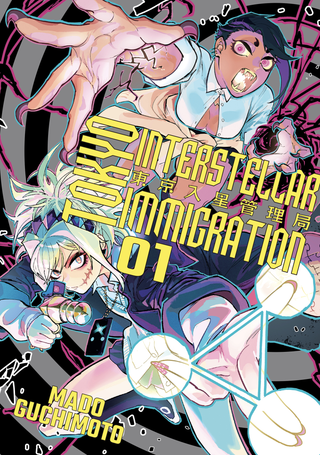
Title: Navigating the Cosmic Melting Pot: A Deep Dive into "Tokyo Interstellar Immigration"
In the vast landscape of contemporary manga, few titles manage to subvert the exhausted "Isekai" trope as effectively and stylishly as Tokyo Interstellar Immigration (*Tokyo Isekai Imin*), written and illustrated by the visionary Mado Guchi. While the industry is currently saturated with stories of high schoolers being transported to fantasy realms, Mado Guchi flips the script, presenting a "Reverse Isekai" that is as much a bureaucratic procedural as it is a surrealist sci-fi masterpiece.
The Premise: A New Kind of Border Control
Set in a near-future Tokyo, the world has undergone a fundamental shift. Massive portals have opened, connecting Earth to a myriad of other dimensions and alien civilizations. Tokyo has become the ultimate destination for "Isekai-jin"—beings from other worlds seeking refuge, work, or simply a change of scenery. However, with interdimensional travel comes the inevitable necessity of red tape.
The story follows two female protagonists, Manabe and Hakobi, who work for the Interstellar Immigration Bureau. Their mission is far from the glamorous space-faring adventures of *Star Trek*. Instead, they are tasked with the gritty, often mundane reality of managing illegal entrants, tracking down entities that have overstayed their visas, and resolving conflicts between human residents and their bizarre new neighbors.
Demographic and Narrative Tone: A Seinen Gem
*Tokyo Interstellar Immigration* is firmly rooted in the Seinen demographic. Published in the prestigious *Monthly Comic Beam*—the same magazine that hosted works like *Desert Punk* and *Emma*—it targets an adult audience that appreciates nuanced storytelling over explosive battle sequences.
The tone is a sophisticated blend of "slice-of-life" and "speculative fiction." It shares a spiritual DNA with works like *Yokohama Kaidashi Kiko* or *Keep Your Hands Off Eizouken!*, prioritizing atmosphere and world-building. Mado Guchi’s art style is minimalist yet incredibly expressive, using clean lines and vast negative spaces to emphasize the alien nature of the visitors against the familiar, cramped backdrop of urban Tokyo.
Core Themes: Beyond the Alien Aesthetic
At its heart, the manga is a profound social commentary disguised as a sci-fi procedural. The primary themes include:
1. The Bureaucracy of Existence: The manga highlights the absurdity of modern administration. Even a cosmic entity capable of warping reality must fill out the correct forms to stay in a one-bedroom apartment in Shinjuku. It explores how systems attempt to categorize the uncategorizable.
2. Multiculturalism and Integration: By using aliens as a metaphor, Mado Guchi explores the friction and beauty of a multicultural society. The "Isekai-jin" aren't just monsters; they are individuals with their own cultures, languages, and struggles to adapt to Earth’s laws and social norms.
3. The Mundane vs. The Extraordinary: The series excels at finding the "ordinary" within the "extraordinary." Seeing a multi-dimensional deity working a part-time job or dealing with a lost passport grounds the high-concept sci-fi in a relatable, often humorous reality.
4. Environmental and Urban Evolution: The manga meticulously details how Tokyo’s architecture and infrastructure have evolved to accommodate non-human biology, offering a fascinating look at urban planning in a post-contact world.
Why You Should Read It
*Tokyo Interstellar Immigration* is a must-read for fans who are tired of power-scaling and harem tropes. It offers a mature, thoughtful, and visually stunning exploration of what would *actually* happen if the doors to the multiverse opened tomorrow. It doesn't focus on the "chosen hero" saving the world; it focuses on the people who have to clean up the mess and make sure everyone has their paperwork in order.
For SEO purposes and for the discerning collector, this title is a testament to the creative heights the Seinen genre can reach when it embraces surrealism and social realism in equal measure. If you enjoy "Low-Fi" sci-fi and character-driven narratives, Manabe and Hakobi’s journey through the bureaucratic labyrinth of interdimensional Tokyo is a trip worth taking.
📖 Leer online en Donmanga:
➡️ Tokyo Interstellar Immigration – Leer Manga