The Art of Deception: A Deep Dive into "My Master Has No Tail"
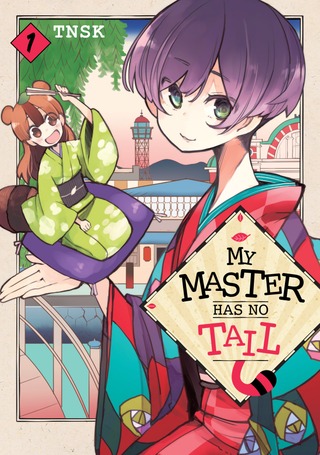
In the vast landscape of historical supernatural manga, few titles manage to blend the whimsy of Japanese folklore with the disciplined rigor of traditional performing arts as seamlessly as *My Master Has No Tail* (*Uchi no Shishou wa Shippo ga Nai*). Written and illustrated by the talented TNSK, this series offers a refreshing perspective on the "fish-out-of-water" trope, set against the vibrant, transformative backdrop of Japan’s Taisho Era.
The Plot: From Magic to Monologue
The story follows Mameda, a young, plucky tanuki (raccoon dog) girl with a simple dream: to follow in her ancestors' footsteps and play tricks on humans. In Japanese folklore, tanuki are legendary shapeshifters, but Mameda quickly discovers that the world has changed. It is the Taisho Era (1912–1926), a time of rapid modernization, steam engines, and burgeoning urban cynicism. When Mameda travels to the bustling city of Osaka to test her skills, she finds that humans are no longer the gullible folk of legends. Her illusions are easily seen through, and her attempts at mischief are met with indifference or annoyance.
Just as Mameda is about to give up on her heritage, she encounters a beautiful, sophisticated woman named Bunko Daikokutei. To Mameda’s shock, she realizes Bunko is not human, but a *kitsune* (fox) living in disguise. However, Bunko doesn't use her supernatural powers to trick people anymore. Instead, she is a master of *Rakugo*—the traditional Japanese art of comedic storytelling.
Bunko explains that in this modern age, magic has lost its power, but "words" have not. By performing Rakugo, she "tricks" the audience into seeing worlds and characters that aren't there, using only a paper fan (*sensu*) and a hand towel (*tenugui*). Fascinated by this "legal" and sophisticated form of deception, Mameda begs Bunko to take her as an apprentice. The manga chronicles Mameda’s arduous journey to master the complex rhythms, vocal inflections, and emotional depth of Rakugo, all while navigating a world where the supernatural is slowly fading into myth.
Demographics and Tone
*My Master Has No Tail* is classified as a Seinen manga, originally serialized in Kodansha's *good! Afternoon*. While the character designs are cute and the humor is often lighthearted, the Seinen classification is evident in its thematic depth. It avoids the typical "battle" tropes of Shonen, focusing instead on the professional and personal growth of an artist. The series treats the technicalities of Rakugo with immense respect, offering readers a sophisticated look at the dedication required to master a traditional craft. It is a "slice-of-life" story with a historical soul, appealing to readers who enjoy character-driven narratives and cultural exploration.
Core Themes: Tradition vs. Modernity
The central theme of the manga is the clash between tradition and modernity. Mameda represents the old world—the world of spirits and magic—trying to find its place in a society driven by industry and logic. The Taisho Era is the perfect setting for this, as it was a period where the "old Japan" and the "new West" coexisted in a fragile balance.
Another pivotal theme is the nature of storytelling. Through Bunko’s mentorship, the manga explores how art serves as a bridge between reality and imagination. It posits that "tricking" someone isn't always malicious; in the context of Rakugo, it is a gift that allows people to escape their daily struggles.
Finally, the mentor-student dynamic provides the emotional core of the series. Bunko is not a gentle teacher; she is demanding and often cynical, reflecting the hardships she faced as a supernatural being surviving in a human world. Mameda’s unwavering optimism serves as a foil to Bunko’s stoicism, creating a heartwarming bond that evolves as they both learn from each other.
Why You Should Read It
For any otaku looking for a series that offers more than just action, *My Master Has No Tail* is a hidden gem. It provides a fascinating education on Rakugo—an art form rarely explored in Western media—while delivering a poignant story about finding one's identity in a changing world. With its beautiful art style that captures the elegance of Taisho-era fashion and the expressive faces of its supernatural cast, it is a visual and intellectual treat. Whether you are a fan of historical fiction or supernatural comedies, Mameda’s journey to find her "tail" in the world of storytelling is a performance you won't want to miss.
📖 Leer online en Donmanga:
➡️ My Master Has No Tail – Leer Manga