# A Journey of Redemption and Love: A Deep Dive into "Sasuke’s Story – The Uchiha and the Heavenly Stardust"
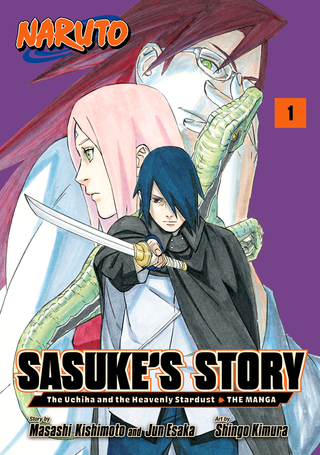
For any seasoned veteran of the *Naruto* franchise, the conclusion of the Fourth Shinobi World War wasn't just the end of an era; it was the beginning of a complex peace. While the original series focused on Naruto’s journey to becoming Hokage, many fans felt a void regarding the internal growth and domestic life of the series' most enigmatic figure: Sasuke Uchiha. This is where "Naruto: Sasuke's Story – The Uchiha and the Heavenly Stardust" (originally *Sasuke Retsuden*) steps in. Adapted from the light novel by Jun Esaka and illustrated with breathtaking precision by Shingo Kimura, this manga is a vital piece of the "Naruto Shinden" lore.
The Premise: A Race Against Time
The story is set during the *Boruto* era, but it shifts the spotlight away from the new generation to focus on a dire crisis affecting the Seventh Hokage. Naruto Uzumaki has fallen victim to a mysterious, debilitating illness that prevents him from accessing his chakra. This condition is not a mere infection; it is a physiological breakdown linked to the Sage of Six Paths, Hagoromo Otsutsuki, who reportedly suffered from the same ailment centuries ago.
To find a cure, Sasuke Uchiha embarks on a high-stakes covert mission to the Land of Redaku, a remote country isolated from the Five Great Shinobi Nations by a vast mountain range. His destination is the Tatar Observatory, an ancient astronomical research institute that now serves as a grim, high-security prison. Legend has it that the Sage of Six Paths found a "heavenly stardust" cure in this very location. Sasuke infiltrates the prison as an inmate, trading his status as the "Shadow Hokage" for a prisoner’s rags to uncover the secrets hidden within the observatory’s walls.
The Dynamic Duo: Sasuke and Sakura
One of the most compelling aspects of this manga is the arrival of Sakura Haruno. Recognizing the danger Sasuke faces and the complexity of the medical mystery, Sakura joins him at the observatory, posing as a traveling doctor.
For years, the relationship between Sasuke and Sakura was defined by distance and unspoken feelings. *The Heavenly Stardust* finally provides the "SasuSaku" development fans have craved. We see them working as a seamless tactical unit. While Sasuke handles the physical reconnaissance and deals with the prison’s mysterious director, Zansul, Sakura utilizes her genius-level intellect and medical expertise to decipher ancient documents and the "Map of the Heavens." Their partnership is portrayed with a mature, quiet intimacy that emphasizes their shared burden as protectors of the Hidden Leaf.
Demographics and Artistic Style
Categorized as Shonen, the manga is serialized in *Shonen Jump+*. However, it leans heavily into the Mystery and Action-Adventure genres. While it maintains the core values of Shonen—friendship, perseverance, and victory—it possesses a slightly more sophisticated tone than the original series.
Shingo Kimura’s art style is a highlight. He manages to capture Masashi Kishimoto’s iconic character designs while adding a refined, modern aesthetic. The Tatar Observatory is rendered with a gothic, claustrophobic atmosphere, and the action sequences—particularly Sasuke’s encounters with the prison’s "guard dog," a prehistoric creature named Menō—are fluid and visceral.
Main Themes: Science, Legacy, and Devotion
1. The Legacy of the Sage of Six Paths: The manga expands the mythology of the Otsutsuki and the origins of chakra. It explores how ancient history can hold the key to modern survival.
2. Science vs. Ninjutsu: The antagonist, Zansul, represents a shift toward scientific experimentation. The conflict arises from the misuse of ancient knowledge to create "unnatural" life, contrasting with the traditional shinobi way.
3. Redemption and Partnership: Sasuke’s journey is a continuation of his atonement. He is no longer the lone avenger; he is a husband and a comrade. The theme of "Heavenly Stardust" serves as a metaphor for the small, bright moments of connection that sustain a person through the darkness.
Conclusion
"Sasuke’s Story – The Uchiha and the Heavenly Stardust" is an essential read for any "otaku erudito." It bridges the gap between the raw emotion of *Naruto Shippuden* and the technological world of *Boruto*. It offers a rare, grounded look at the Uchiha’s domestic loyalty while delivering the high-octane tactical battles the franchise is known for. If you want to see Sasuke Uchiha at his most vulnerable and his most formidable, this investigation into the stars is a journey you cannot miss.
📖 Leer online en Donmanga:
➡️ Naruto – Sasuke's Story – The Uchiha and the Heavenly Stardust – Leer Manga