Title: Exploring the Creative Genesis: A Deep Dive into Akira Toriyama's Manga Theater
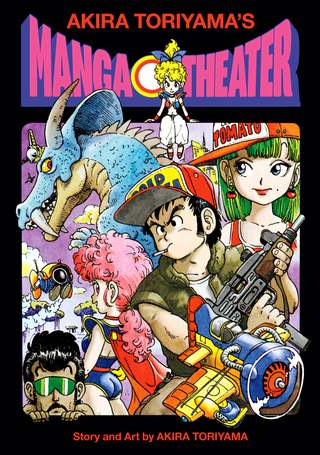
Before the world-shaking phenomenon of *Dragon Ball* and the whimsical chaos of *Dr. Slump*, a young artist from Nagoya was busy redefining the boundaries of gag manga and visual storytelling. Akira Toriyama’s Manga Theater (known in Japan as *Toriyama Akira Marusaku Gekijō*) is a definitive collection of short stories that serves as both a historical archive and a masterclass in Shonen entertainment. For any self-respecting otaku or manga scholar, this anthology is the "Rosetta Stone" of Toriyama’s legendary career.
Demographic and Context
Primarily categorized under the Shonen demographic, these stories were originally serialized in *Weekly Shōnen Jump* and its various special editions between the late 1970s and the 1990s. While the core audience is young males, the "Manga Theater" transcends age through its universal slapstick humor and breathtaking mechanical designs, occasionally veering into Seinen territory with its more cynical or irreverent parodies.
Plot Overview: A Kaleidoscope of Worlds
Unlike a traditional linear manga, *Manga Theater* is an anthology. It compiles the experimental "one-shots" that allowed Toriyama to hone his craft. The collection begins with his debut work, Wonder Island, a surrealist piece featuring a stranded WWII pilot, a caveman, and a series of increasingly absurd non-sequiturs. It was a polarizing start, but it established the "Toriyama Style": a blend of high-octane action and subverted expectations.
As the volumes progress, we see the prototypes of his greatest hits. Dragon Boy, for instance, is the clear spiritual predecessor to *Dragon Ball*. It follows a young, martial-arts-trained boy escorting a princess, featuring a familiar sense of adventure and a dragon that lives in a small crystal. Similarly, The Adventure of Tongpoo introduces us to a sci-fi world where capsules (the precursors to Hoi-Poi Capsules) are used to store massive vehicles and houses.
Other standout stories include Go! Go! Ackman, which follows a mischievous demon child who harvests souls, and Pola & Roid, a space-faring comedy that won Toriyama a prestigious readers' award. Each story functions as a self-contained universe, showcasing Toriyama’s ability to build a world, introduce a conflict, and deliver a punchline within a mere 15 to 40 pages.
Main Themes: The Ordinary vs. The Extraordinary
The central theme of *Akira Toriyama’s Manga Theater* is the collision of the mundane with the fantastic. Toriyama delights in placing ordinary, often lazy or flawed characters into extraordinary circumstances. Whether it’s a bumbling alien, a tiny samurai, or a girl with super-strength, the conflict rarely stems from a desire for world peace. Instead, characters are driven by basic human (or monster) desires: food, money, or simply being left alone.
Another recurring theme is the subversion of the "Hero’s Journey." Toriyama frequently mocks the tropes of traditional Shonen battle manga. His protagonists are often anti-heroes or underdogs who win through luck, trickery, or sheer absurdity rather than "the power of friendship." This irreverence is what made his work stand out in the rigid landscape of 1980s manga.
Artistic Evolution and SEO Significance
From an artistic standpoint, the anthology is a visual timeline. Readers can witness Toriyama’s transition from a rounder, Disney-influenced aesthetic to the sharp, angular, and highly detailed mechanical style that defined the 90s. His obsession with mecha design—motorcycles, planes, and futuristic tanks—is a constant thread that ties these disparate stories together.
For fans searching for the origins of modern Shonen, *Akira Toriyama’s Manga Theater* is essential reading. It captures the raw, unfiltered creativity of a creator who wasn't yet burdened by the massive editorial pressure of a long-running series. It is a celebration of the "short story" format, proving that a well-timed gag and a beautifully drawn explosion are sometimes all you need to make manga history.
In conclusion, this collection is more than just a curiosity for *Dragon Ball* completionists; it is a vibrant, hilarious, and technically brilliant showcase of one of the greatest imaginative minds in the medium. If you want to understand the DNA of modern manga, you must enter the Theater.
📖 Leer online en Donmanga:
➡️ Akira Toriyama's Manga Theater – Leer Manga