Title: Navigating the Invisible Spectrum: A Deep Dive into "My Brain is Different"
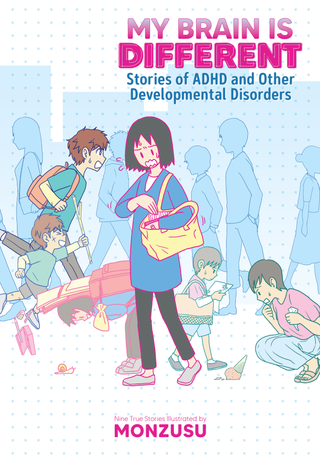
In the vast landscape of contemporary manga, where high-stakes battles and fantastical worlds often dominate the charts, there is a growing and vital niche for "essay manga"—works that ground themselves in the raw, unfiltered realities of the human condition. One of the most poignant and educational entries in this genre is "My Brain is Different: Stories of ADHD and Other Developmental Disorders" (*Boku no Nou wa Hen da: Hattatsu Shougai to Ikiru Hito-tachi*), written and illustrated by the talented Monzusu. As an expert in the medium, I find this work to be a masterclass in empathy, shedding light on the "invisible" struggles of neurodivergence within a society that often demands rigid conformity.
Demographics and Genre: A Seinen for the Soul
While many readers associate manga with the action-packed tropes of *Shonen* or the romantic flourishes of *Shojo*, *My Brain is Different* firmly occupies the Seinen demographic. It is targeted toward adults and older teens who are looking for mature, reflective content. Rather than a linear narrative, it functions as a non-fiction anthology, blending personal memoir with investigative journalism. It belongs to the "Slice of Life" and "Medical/Educational" genres, providing a bridge between clinical understanding and lived experience.
The Plot: A Mosaic of Neurodiversity
The manga begins with the author’s own journey. Monzusu, a mother of two, spent years feeling "out of sync" with the world around her. It wasn't until her own children were diagnosed with developmental disorders that she began to recognize the same patterns in herself. This realization serves as the catalyst for the book.
The narrative structure is episodic, featuring nine distinct stories based on real-life interviews. Each chapter focuses on a different individual—ranging from office workers struggling with executive dysfunction to students who find the traditional classroom environment suffocating. We meet people dealing with ADHD (Attention Deficit Hyperactivity Disorder), ASD (Autism Spectrum Disorder), and LD (Learning Disabilities).
The "plot" is not about a grand external conflict, but rather the internal battle of reconciling one's brain chemistry with societal expectations. We see the exhaustion of "masking"—the act of suppressing neurodivergent traits to fit in—and the profound relief that comes with a formal diagnosis. It is a story of self-discovery, where the "climax" of each arc is often the moment a character realizes they aren't "broken" or "lazy," but simply wired differently.
Main Themes: Beyond the Diagnosis
The core theme of *My Brain is Different* is the de-stigmatization of neurodiversity. In Japan, a culture that deeply values the concept of *kyuuki wo yomu* (reading the air/social cues), being neurodivergent can lead to intense isolation. Monzusu explores how these disorders manifest not just as clinical symptoms, but as social barriers.
Another major theme is The Struggle for Integration. The manga doesn't shy away from the harsh realities of the workplace. It depicts the anxiety of forgetting simple tasks, the sensory overload of a busy office, and the heartbreak of being misunderstood by peers. However, it balances this with themes of Adaptation and Hope. It highlights how small accommodations and a shift in perspective can allow neurodivergent individuals to thrive.
The art style is intentionally soft and approachable. Monzusu uses a clean, minimalist aesthetic that prevents the heavy subject matter from feeling overwhelming. This visual choice makes the complex psychological concepts accessible to a wide audience, ensuring that the focus remains on the emotional resonance of the stories.
Why It Matters for the Modern Reader
For SEO purposes and general recommendation, *My Brain is Different* is essential reading for anyone interested in mental health representation in media. It moves away from the "savant" tropes often seen in fiction and instead offers a grounded, realistic look at the day-to-day lives of people on the spectrum.
Whether you are neurodivergent yourself, a parent, an educator, or simply a fan of high-quality Seinen manga, this book offers a window into a world that is often overlooked. It challenges the reader to rethink what "normal" looks like and celebrates the courage it takes to live authentically in a world that wasn't built for you. Monzusu has created more than just a manga; she has created a tool for survival and a manifesto for kindness.
📖 Leer online en Donmanga:
➡️ My Brain is Different – Stories of ADHD and Other Developmental Disorders – Leer Manga