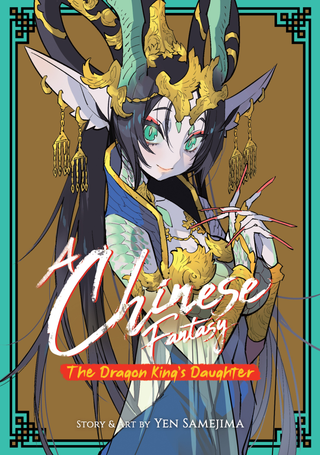
For any seasoned connoisseur of the medium, the name Shigeru Mizuki carries a weight similar to that of Osamu Tezuka. While Mizuki is globally celebrated for *GeGeGe no Kitaro*, his deeper, more atmospheric works often explore the intersection of folklore and human fallibility. "A Chinese Fantasy" (originally titled *Chuugoku Gensou* or *Chuugoku Hourai*) stands as a monumental testament to his fascination with the supernatural, specifically looking toward the vast, mystical landscape of ancient China.
The Plot: A Journey into the Eerie and the Divine
"A Chinese Fantasy" is not a singular linear narrative but rather a masterful anthology of stories adapted from classical Chinese literature, most notably Pu Songling’s *Liaozhai Zhiyi* (Strange Tales from a Chinese Studio). Mizuki takes these centuries-old tales of the macabre and the miraculous and breathes new life into them through his unique visual lens.
The stories typically follow humble protagonists—often struggling scholars, weary travelers, or greedy merchants—who find themselves crossing the thin veil between the mortal realm and the world of spirits. In one tale, a man might find himself enchanted by a beautiful woman who is actually a fox spirit (Huli Jing) in disguise; in another, a Taoist monk performs feats of magic that defy the laws of physics, only to teach a lesson in humility.
The narrative structure is episodic, yet it is bound together by a consistent atmosphere of "Yōkai-esque" wonder. Mizuki focuses on the "strange"—the moments where the mundane world breaks down and reveals a reality governed by ghosts, gods, and celestial bureaucracy. Unlike modern high-fantasy, the stakes in "A Chinese Fantasy" are often moral and psychological, focusing on how a single encounter with the divine can alter the course of a human life forever.
Demographics and Artistic Style: A Seinen Masterpiece
"A Chinese Fantasy" is firmly rooted in the Seinen demographic. While the character designs may appear "cartoony" or simplistic at first glance—a hallmark of Mizuki’s style—the themes, philosophical depth, and occasional depictions of the grotesque are intended for an adult audience.
Mizuki’s art style creates a fascinating juxtaposition that is essential for SEO-focused discussions on his work: he pairs highly detailed, almost photorealistic stippled backgrounds of nature and ancient architecture with simplified, expressive characters. This contrast serves a narrative purpose, making the supernatural elements feel grounded in a world that looks and feels tangible. It invites the reader to take the folklore seriously while enjoying the whimsical, sometimes satirical expressions of the human cast.
Main Themes: Morality, Irony, and the Supernatural
The core of "A Chinese Fantasy" lies in its exploration of Human Nature vs. The Divine. Mizuki uses Chinese folklore to critique human vices such as greed, lust, and vanity. Many stories function as dark fables; the supernatural entity is rarely "evil" in a Western sense, but rather acts as a mirror to the protagonist's own heart.
Another major theme is The Beauty of the Unknown. In an era where everything is explained by science, Mizuki’s adaptation reminds the reader of a time when the woods, the mountains, and the shadows held secrets. There is a palpable sense of "Awe" (or *Yūgen*) that permeates the pages, encouraging a respect for the mysteries of the universe.
Furthermore, the manga explores Taoist and Buddhist Philosophy. Concepts of karma, reincarnation, and the fluidity of form are prevalent. The characters often learn that the physical world is an illusion and that true wisdom lies in understanding one's place within the cosmic order.
Why It’s a Must-Read for Otaku Erudites
For fans of *Mushishi* or *Natsume’s Book of Friends*, "A Chinese Fantasy" offers a more historical and cynical progenitor to the "supernatural slice-of-life" genre. It is a bridge between Japanese manga sensibilities and the rich literary history of China.
In conclusion, "A Chinese Fantasy" is a sophisticated, haunting, and often humorous collection that showcases Shigeru Mizuki at the height of his powers as a folklorist. It avoids the tropes of modern Shonen battle manga in favor of atmosphere, irony, and a deep-seated respect for the ghosts of the past. For any reader looking to expand their knowledge of manga history and world folklore, this Seinen gem is an essential addition to their library.
📖 Leer online en Donmanga:
➡️ A Chinese Fantasy – Leer Manga